A Gentle Collapse: Louis-Paul Caron on Climate Change and Digital Art

A Gentle Collapse: Louis-Paul Caron on Climate Change and Digital Art
Climate change is often represented through spectacle: burning forests, collapsing cities, apocalyptic skies. But in the work of French artist Louis-Paul Caron, the catastrophe rarely explodes.
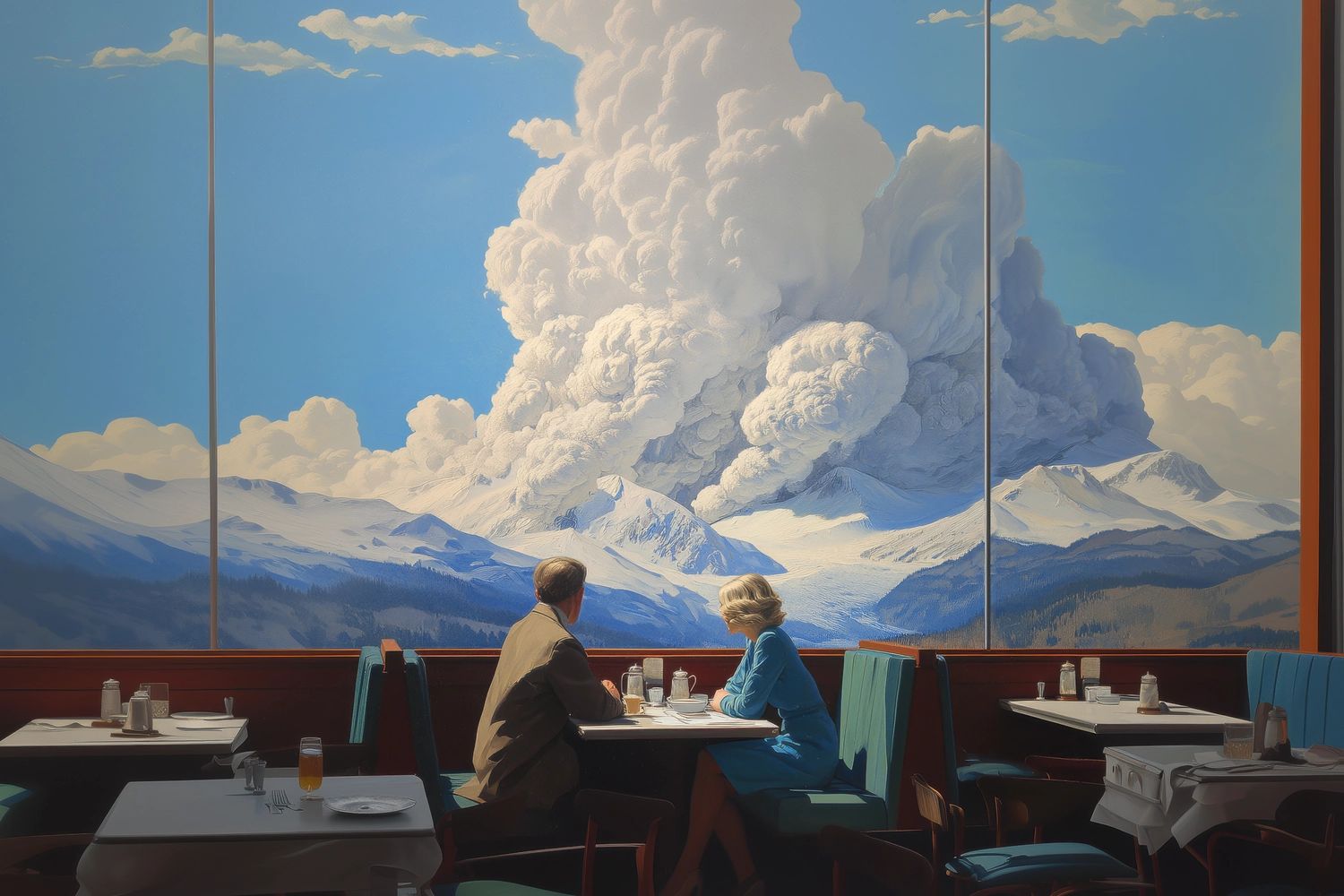
Across his artworks, people sit in bars, diners, cars, or interiors that feel familiar and calm. Outside the window, glaciers melt, mountains dissolve, and landscapes become unstable.
Rather than showing disaster as a sudden event, Caron frames climate change as something unfolding slowly, almost invisibly. The calm becomes unsettling because it mirrors real life: most people are not surrounded by flames or floods every day, yet the consequences of climate change are already present.
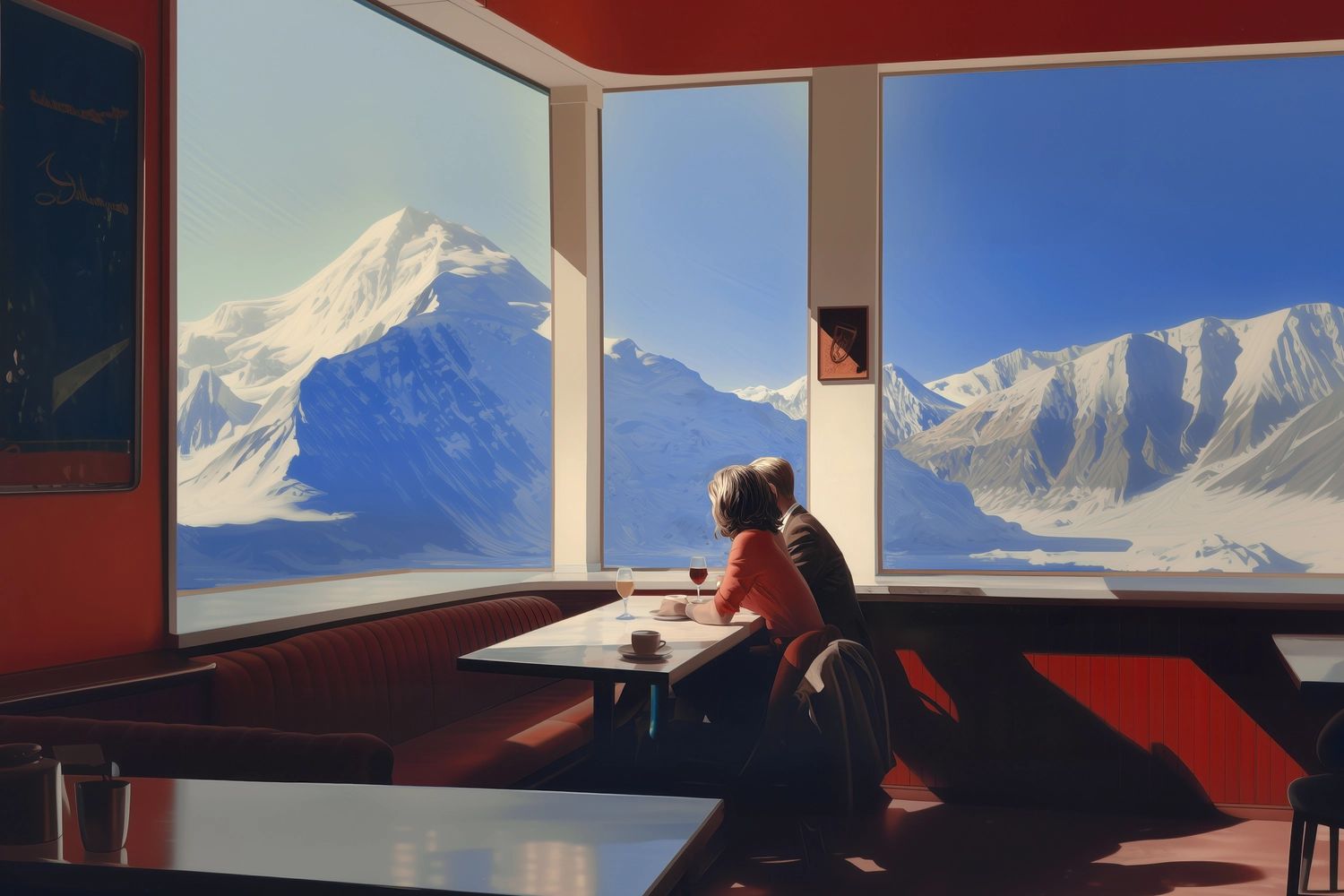 The Alpine Bar by Louis-Paul Caron
Caron’s new series of works, A Gentle Collapse, was the focus of a live conversation hosted by Anna Filippova, CEO of Digital Original. Broadcast on Instagram, the discussion invited audiences directly into the artist’s studio, where he reflected on his artistic practice, key influences, and his ongoing engagement with themes of climate, technology, and contemporary life.
The exchange was notably candid, offering rare insight into Caron’s thinking and creative process. We’re pleased to share highlights from that conversation—moments that illuminate how his work navigates the tensions between stillness and collapse, digital and physical, observation and responsibility.
A.F.: Could you tell us a bit more about what your artworks are about?
L.P.C.: For those who may not be familiar with my work, I focus a lot on climate change and on how we, as humans, interact with the environment. I’m interested in how we perceive nature and how art can create a sense of tension around that relationship. My practice is rooted in visual, narrative-based work, often showing people confronted with their surroundings.
Over the past few years, I’ve developed several series around themes like incentives and fires, exploring ideas of heat, danger, and transformation. The series I’m presenting now with Digital Original is quite new—I’ve been working on it for only a few months—and it feels much quieter in comparison. Rather than scenes of burning or urgency, this work leans more toward contemplation, creating a subtle tension around how we observe landscapes and how we sense environmental change.
For a long time, I was focused on heat—how people experience it, how it affects our bodies and our ways of living. More recently, my attention has shifted toward perception: how we look at the world and how we read landscapes. The three works presented here focus on mountains, snow, and melting snow.
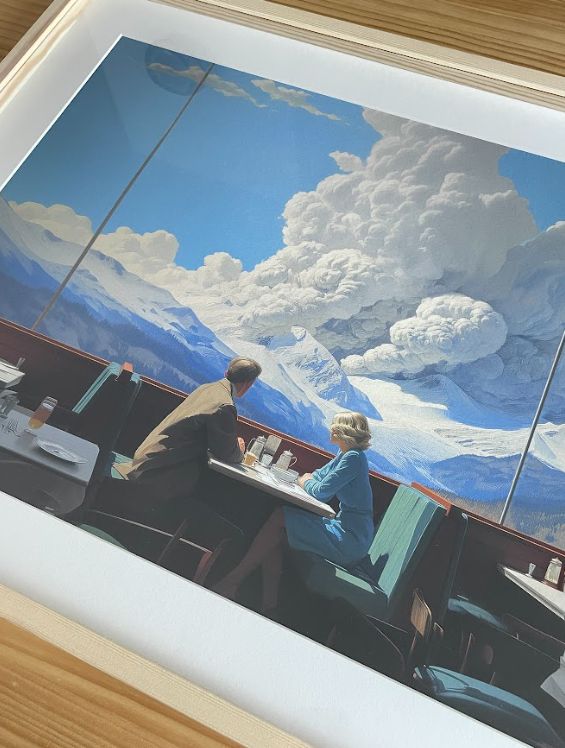 The Avalanche (printed and framed) by Louis-Paul Caron
A.F.: Why did you decide to change your focus from fire to ice in your works?
L.P.C.: I think the first idea came from fires and wildfires, because they have something quite hypnotic about them, and I found a very interesting AI quality in working with fire. The idea of working with snow and cold comes more from wanting to explore landscapes that are changing or disappearing because of climate change.
The melting of large glaciers, ice, and mountains is something I learned about very early in relation to climate change. I think it was around 2006, with Al Gore’s documentary. I was maybe only ten years old, but it was the first time I heard about what was happening and how everything was accelerating while nobody was really doing anything about it.
There were these before-and-after images showing mountains melting, and I think that stayed with me. This is one of the first artworks I’ve made on this subject, but I’m going to work more on it because it’s extremely interesting and also massive. We don’t really know how to act on it. It’s like the fires, but in a slower, quieter way, and people don’t talk about it as much.
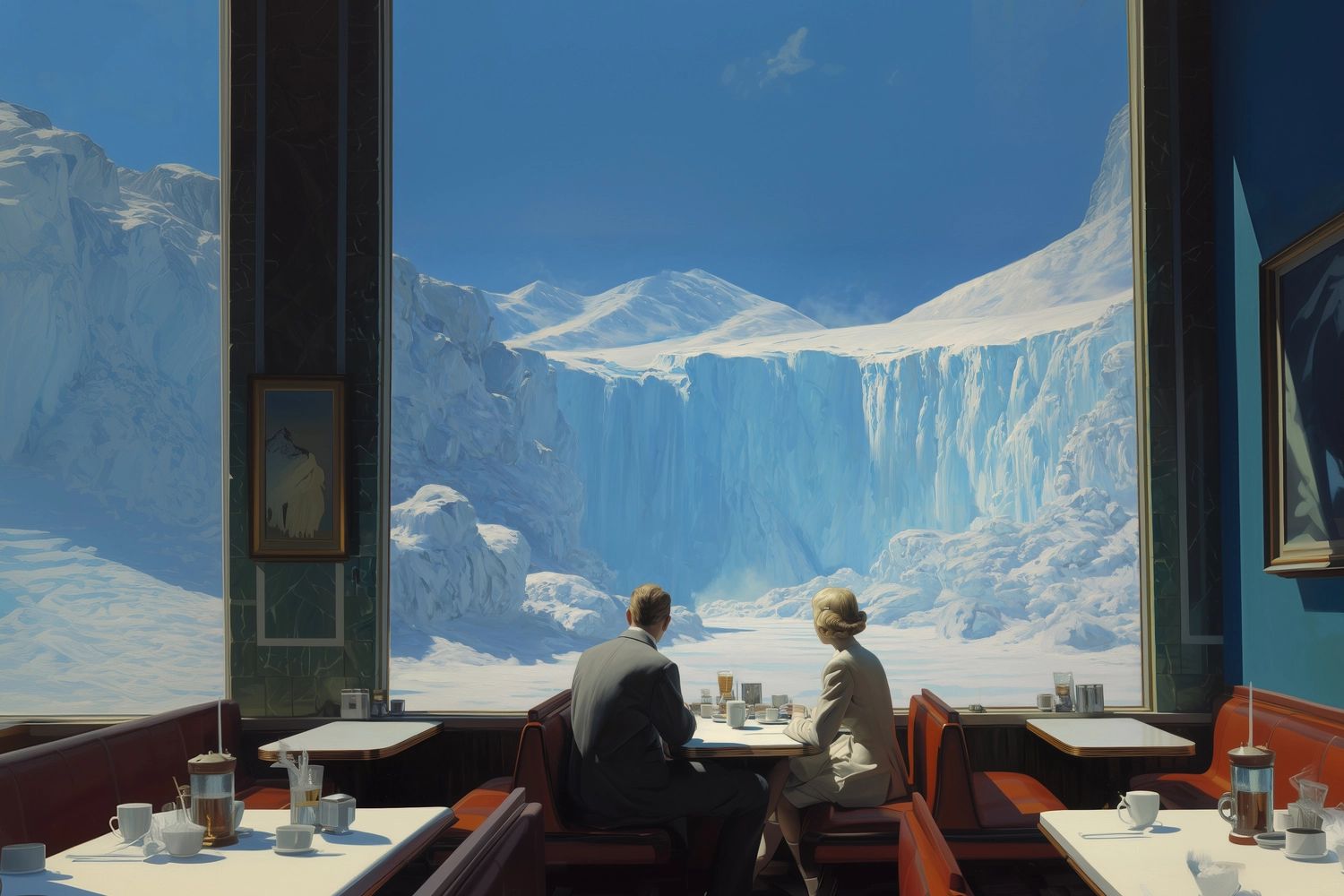 The Glacier by Louis-Paul Caron
A.F.: Coming back to your characters, they are super calm in these interiors. They act like nothing happened. They just sit in the bar looking out the windows.... Why?
L.P.C.: I think the first idea I had was about denial—climate denial—about how people sometimes either don’t want to see or face the danger, or they know about it but don’t know how to act on it. This idea of people silently waiting, maybe watching but not really reacting, in this kind of familiar home place, is meant to show the comfort and the modern life we’re living.
I also have a very specific aesthetic, inspired by painting from the 1950s, especially American painting. There’s this idea of the American dream, of a perfect illustration of a perfect life, confronted with the reality of modern times.
A.F.: Do you see your characters as a part of the landscape or as witnesses to its disappearance? What kind of roles are your characters in your artworks?
L.P.C.: I think it’s a bit of both. People are part of the landscape, but they’re also witnesses to it. I think we are part of nature, but at the same time, we belong to a society and a culture that usually separates people from nature, as if they were two different worlds. In my artworks, I really emphasize this idea of separation.
It’s often about people watching the world burn while continuing their daily lives. Most of the time, they are physically separated from the landscape, often by a window. They are placed in the foreground, while the environment is in the background. It creates this clear division between people and nature.
And in a way, that’s how we treat the world today—the environment becomes just the background. When we talk about “the environment,” it’s not really the subject anymore; it’s not the main focus.
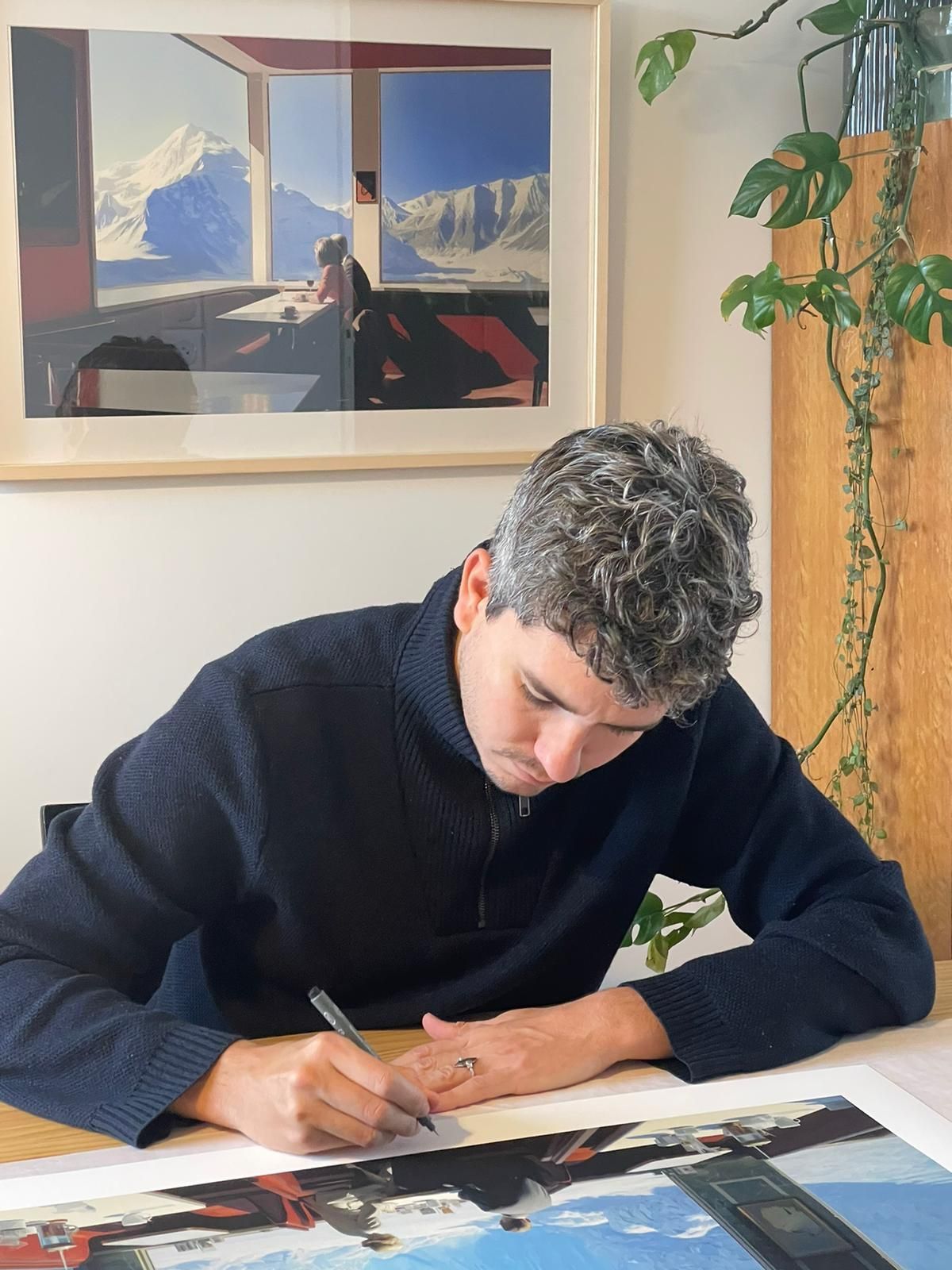 Louis-Paul Caron signs printed works
A.F.: Can you talk more about the concept of solastalgia and what the difference is between it and nostalgia?
L.P.C.: Nostalgia is about another time or something that no longer exists, something you regret. Solastalgia, on the other hand, is about seeing your environment disappearing while you are still in it. You can see it around you, and you feel that it’s dying, that it’s going to disappear. This concept was developed by Glenn Albrecht, an Australian philosopher who has coined many words to describe the feelings we have regarding climate change. He created this term around 20 years ago to give people a vocabulary to express these emotions. With my project, I want to develop a visual vocabulary to show how we physically relate to climate change.
A.F.: You’re now working with both digital and physical editions. Conceptually, why is it important for you that these two formats coexist rather than exist separately? Why does it matter to you how you work with digital and physical formats?
L.P.C.: For me, the two formats really coexist—it’s really just one artwork that exists both digitally and physically. I’ve always liked having something physical because it brings a certain sensitivity. Even when I work with video, I only make one edition. All my artworks are single editions because I like the aura of an artwork, the idea that it exists in only one place. This is something typical of traditional art: a painting is unique, and you have to experience it physically. For video and editions, it’s different, but I want to recreate that sense of uniqueness.
How I make a digital artwork physical is always a big question, and there’s no single answer—it depends on the artwork. I’ve been printing on fabric for a long time to create something close to canvas, close to painting. Now I also do oil paintings from AI videos, and I have a pen plotter to create drawings. For this collection, I’m making fine art prints. It’s usually a printer designed for photography, but I printed on textured paper to create something you can almost feel—it sits somewhere between photography and painting.
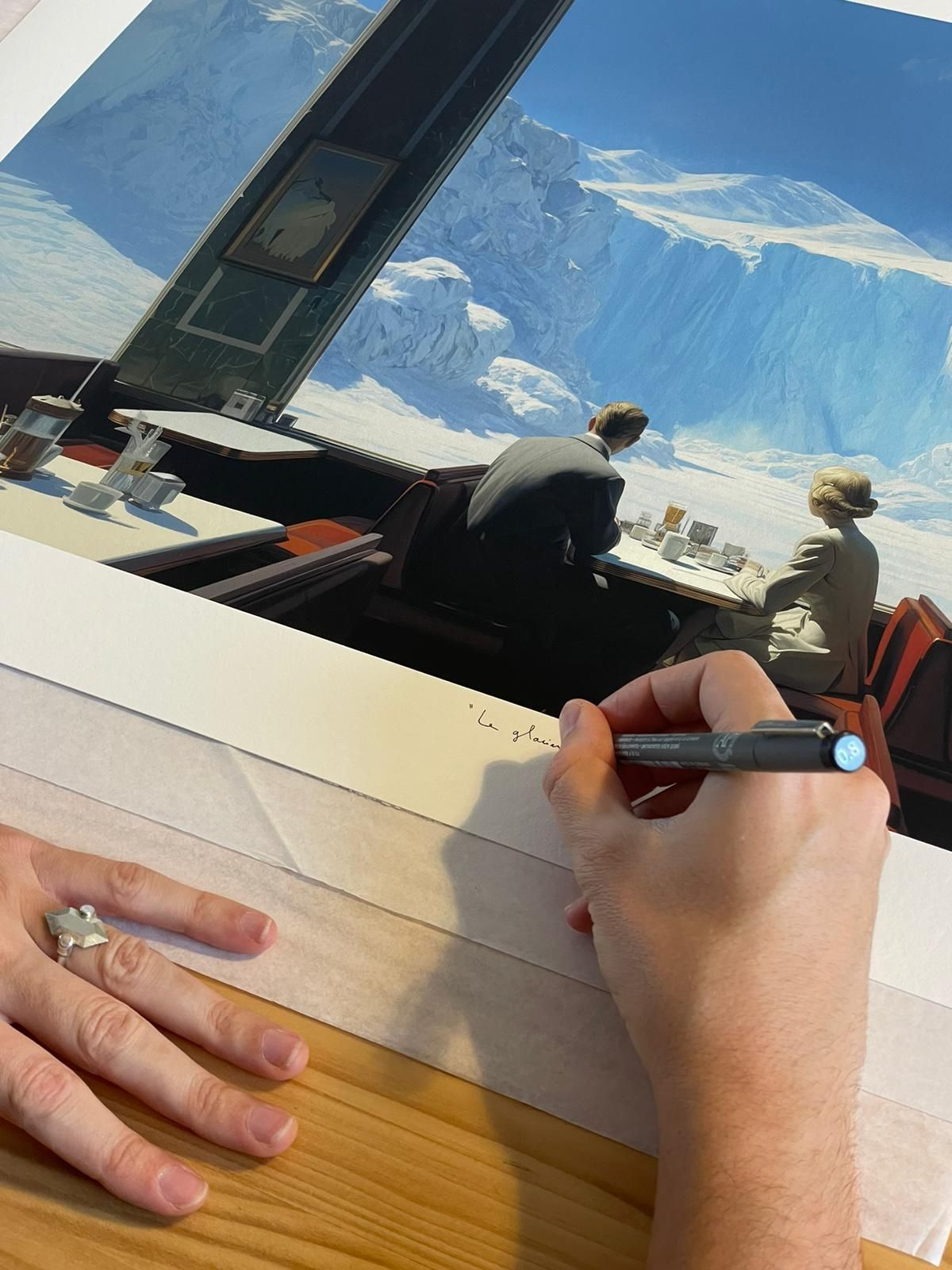 The Glacier (printed and signed) by Louis-Paul Caron
A.F.: There’s a really interesting correlation between these two dimensions that you seem to play with in every project. How did it happen? Did your parents give you these tools, or were you connected to them somehow through your childhood observations?
L.P.C.: I guess it’s because I grew up with digital tools, but I also had painting, brushes, and pens. For me, digital tools are just an extension—they’re on the same level as traditional tools. I was born in ’95, and at home we had Windows 95. I spent a lot of time playing with paint software, where you could just draw, and I also had some small video games for kids that involved painting and drawing. We even had a printer, so I could make something digital and immediately have it physically on paper—there was never a question about physicality.
As I grew up, I started playing a lot of video games. When I saw cinematic sequences in games, I wanted to understand how they were made. I would look at the back of the game boxes to see which software they used, then try to find a crack online to experiment with programs like ZBrush, where you can sculpt in 3D. For a long time, I did a lot of 3D work with the perspective of making video games or animated films. From there, I moved to animated videos—something in between painting and cinema.
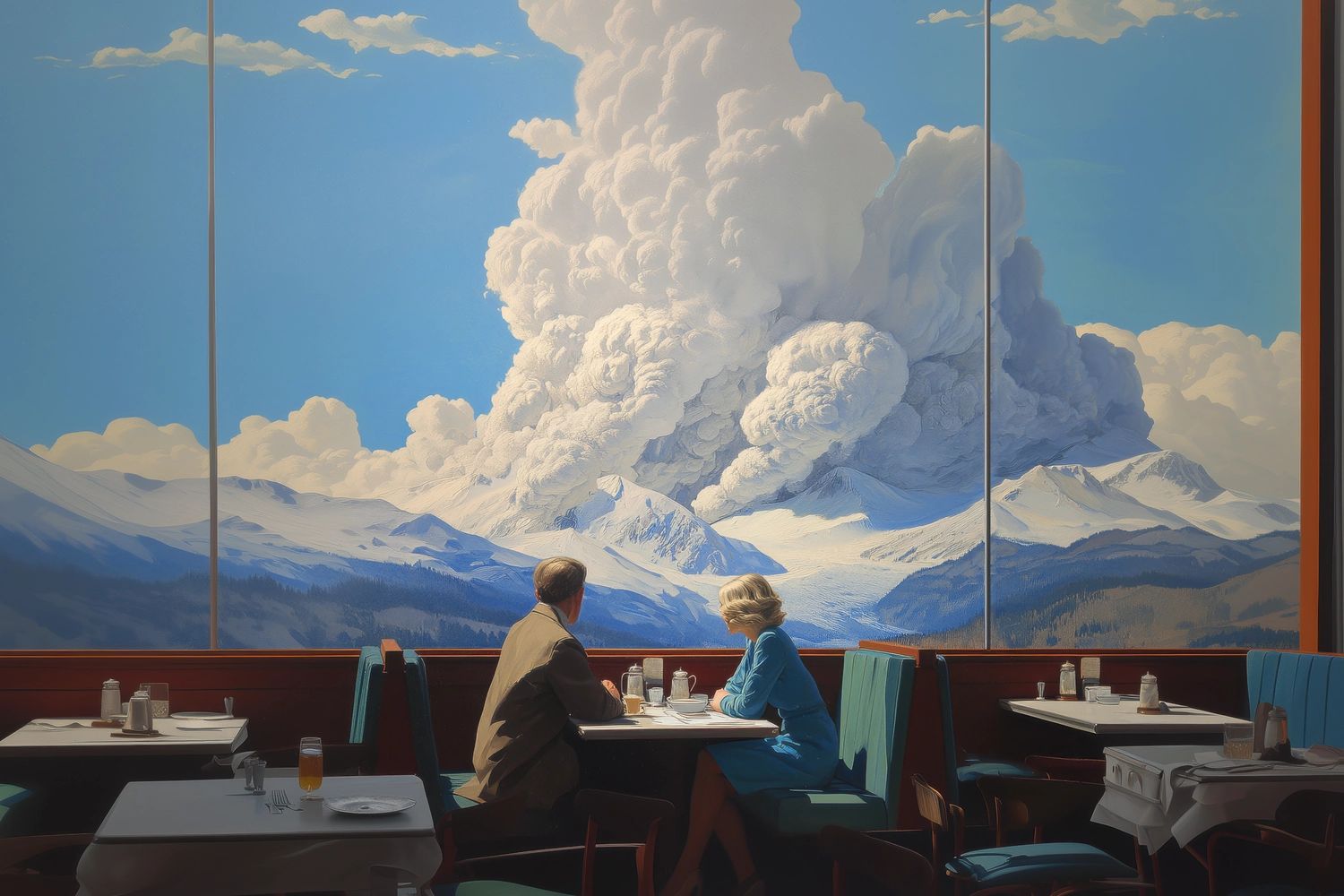 The Avalanche by Louis-Paul Caron
A.F.: Have you noticed a difference in the way your audience responds to your digital and physical artworks?
L.P.C.: Usually, I have this stereotype in my head that young people will completely understand digital artworks, while others won’t—but it’s never true. It really depends on the personality of the person. Sometimes people really fall in love with a video, and other times they just don’t understand why I would work in video at all.
Over the past five years, with NFTs, there’s been a new kind of collector—different from traditional collectors—who are comfortable owning something completely digital, with many artworks stored in their wallet that they may never exhibit physically. Before NFTs, people mostly bought physical pieces in galleries to display at home. Now, your phone can be your home for art—you can exhibit it on your screen without putting it on a wall.
For me, it’s an interesting moment to be an artist because there are so many different kinds of people, opportunities, collectors, and galleries, all doing very different things.
A.F.: Can you briefly draw a picture of such a collector? Are they from Gen Z or the millennial generation, or are there any main features that might define a “typical” collector in your opinion?
L.P.C.: There’s really no specific profile. I can never predict who will connect with the work. Two weeks ago, we were at Paris Photo with DANAE, and I was exhibiting only digital videos. Before the fair, I thought we might need physical editions because photography collectors might not understand video or might not want a screen at home. But in the end, it was a great success. Most people didn’t know much about digital art—they just saw the artworks, really liked them, and collected them. It was really a mix of random profiles.
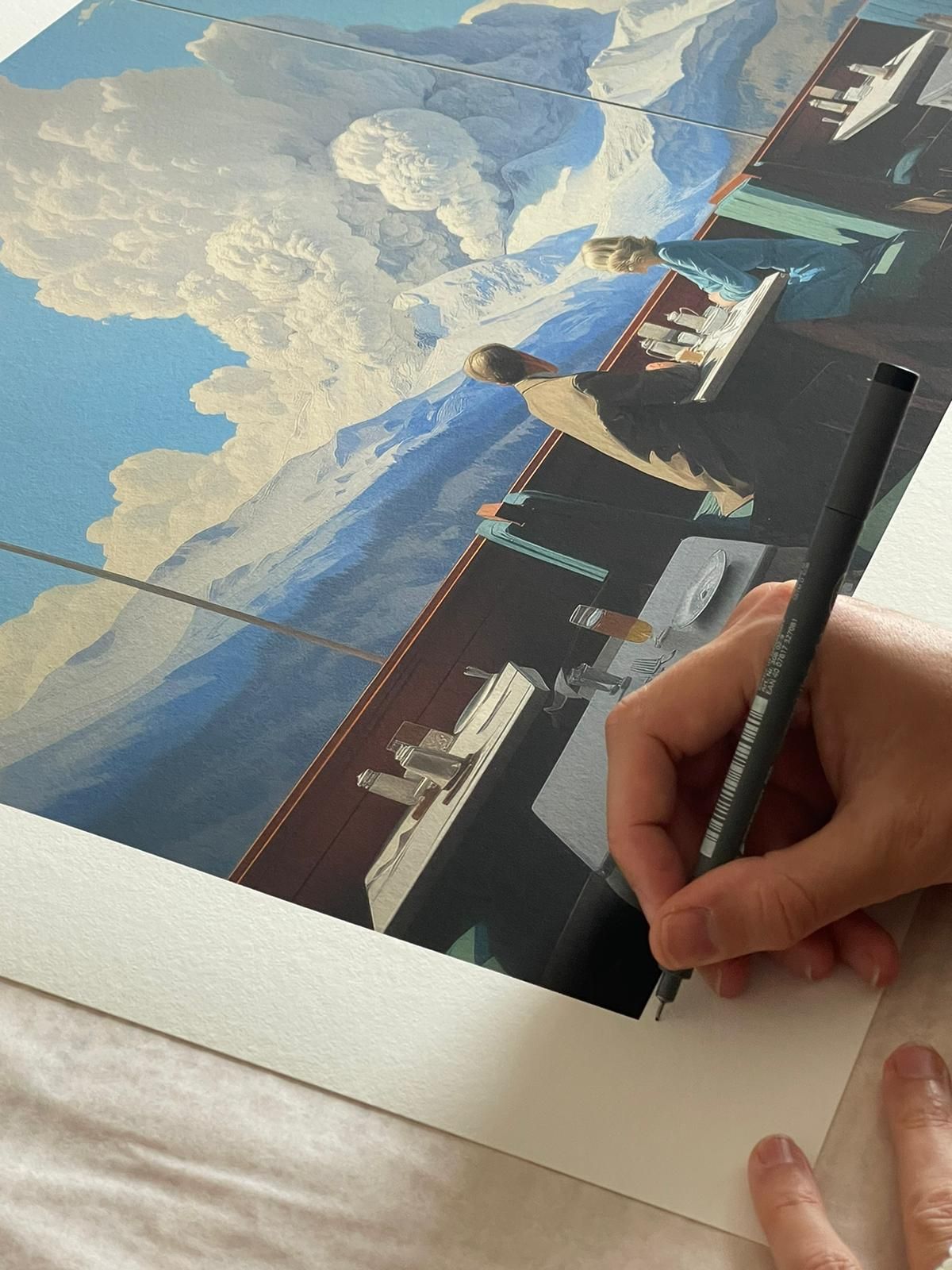 Louis-Paul Caron signs printed works
A.F.: Imagine people seeing your art about climate change in 100 years, if we’re still around. How do you think they would react?
L.P.C.: I have no clue… I mean, if they see it in 100 years, it means that maybe it wasn’t viral, but people still liked it just enough to show it. So maybe it was relevant. I try to make something visually, like an image of society that people can relate to and understand, and maybe share the same feelings as I do. I hope that in 100 years it’s not going to be a total disaster regarding climate change—I’m usually very pessimistic about that.
So yeah, to answer the question: 100 years from now, I don’t know. I hope they’ll say, “Okay, this was from the past, and now it’s better at least.”
Digital and Physical: One Artwork, Two Realities
Exclusively, with Digital Original, Louis-Paul Caron presents three phygital works from A Gentle Collapse: THE ALPINE BAR, THE AVALANCHE, and THE GLACIER.
Now collectors and audiences beyond institutional spaces have direct access to this body of work.
Each phygital piece is one-of-one and acquired as a complete dual artwork: the collector receives the digital work delivered directly to their wallet, together with a physical print on Museum Etching Hahnemühle paper, signed by the artist and presented in a wooden frame—ready to be displayed and experienced within a lived space.


