
Can AI Replace Artists? Hear It from Marjan Moghaddam
The ongoing debate over whether AI can replace real artists is everywhere — from conference panels to studio conversations to late-night group chats. And this question took centre stage again at Middle Tennessee State University’s AI & the Future of Art Summit 2025: Creativity Reimagined, where artists, historians, and cultural thinkers gathered to confront what creativity means in a world of intelligent machines.
Among the voices cutting through the noise was Marjan Moghaddam, the award-winning, pioneering, and widely exhibited digital artist whose career spans more than four decades.
And now, she’s opening the floor to collectors with a live auction on her branded storefront, offering a chance to claim a work from her series titled Boy Wonder.
The Generation That Trained AI: “We Were the Precursors”
Moghaddam belongs to the generation of artists whose stylistic inventions and visual languages form the foundation of today’s AI datasets. Long before image generators existed, her work helped define what “digital art” looks like.
“There is a whole generation of digital artists who created original works that AI was and is trained on. We were the precursors. We were the ones who originated these visuals, these aesthetics, these artistic styles that AI is now ripping off for anybody who prompts it,” she said.
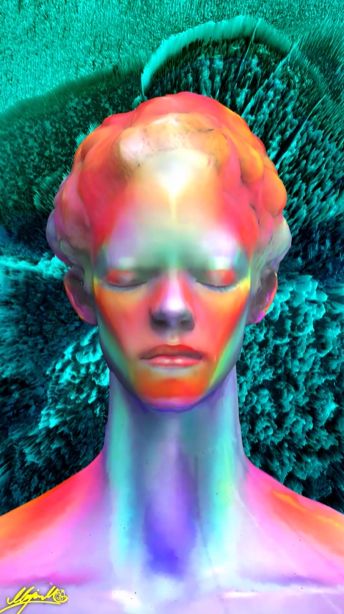 Still image from Boy Wonder by Marjan Moghaddam
Her practice spans early generative systems, video processing, hand-coded 3D modelling, animation, installation, and VR — offering a rare continuity across decades of technological change.
“I’m known for my unique and original style of figuration, primarily in 3D CG, and I do 3D CG animation for obviously NFTs screen, AR VR, and I've also done many prints and physical sculptures, and also commissioned public art internationally. My first exhibited computer art was back in the 1980s on a Commodore 64 in 1984,” she noted.
sbb-itb-4e84554
What AI Will Never Steal From Marjan’s Art
For Moghaddam, it is very important to personalize digital art, create it in a way that's meaningful for her, and in a way that also allows her to convey that meaning and share that experience.
She emphasises the importance of embodied, intentional processes: sculpting, keyframing, hand-animation, real-time performance, and modelling.
“People say, I know your work the second I see it. And to me that’s the most meaningful,” she said.
As Marjan highlighted, many artists nowadays simply feed AI with prompts to achieve the desired result, but she works differently; her art is a transformational process.
“Why bother climbing Everest if you can just text prompt, generate a selfie on top of Everest? Obviously, there's a process, and that process is transformational. The reason I employ this is that it transforms me. Think of it as a record, as the documentation of that process of transformation and the meaning that it conveys. That's what art is about for me. It isn't just a visual that you deliver,” she said.
The artist also noted that she avoids creating things that can be easily replicated by AI, which pushes her to find new ways of working that still remain beyond its reach. She compared AI-generated art to plastic flowers: they can be found in many homes, but not all, and their existence doesn’t mean we’ve lost our ability to cultivate real, beautiful flowers.
“There's also a place for art that isn't about plastic flowers…”
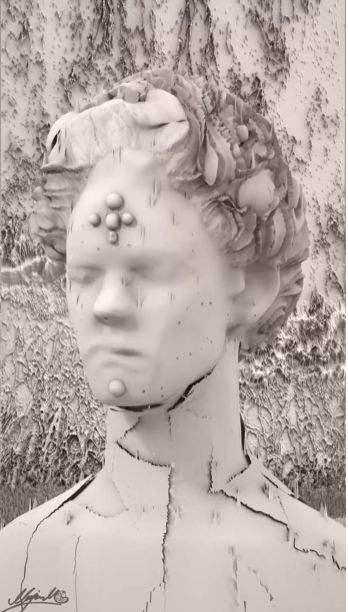 Still image from Boy Wonder Clay Render by Marjan Moghaddam
Boy Wonder: Where You Can Catch Marjan Moghaddam’s Works
During her summit talk, Moghaddam revealed insights into her latest body of work, Boy Wonder, which is currently on auction.
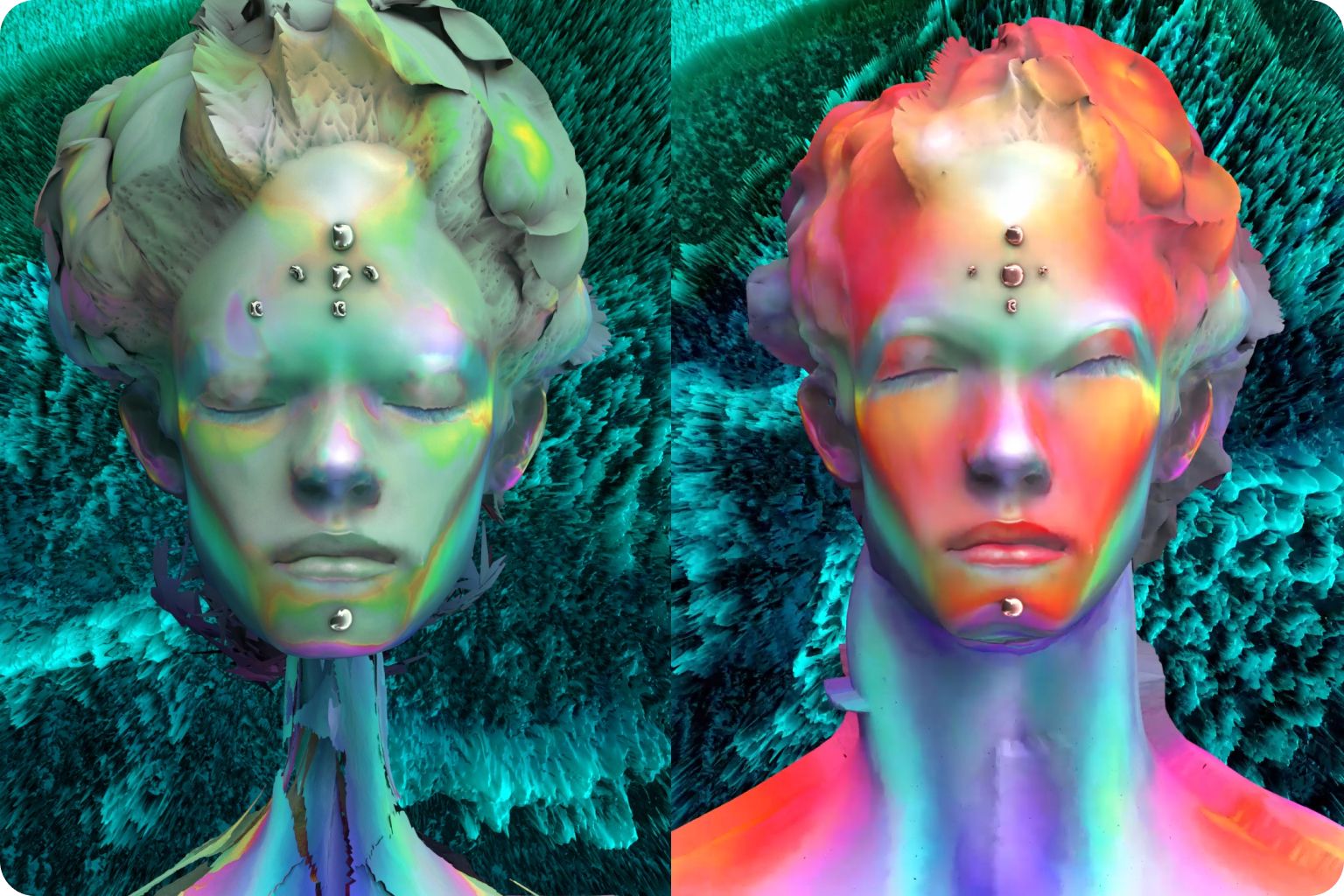
Boy Wonder continues her ongoing #arthack practice of intervening in exhibitions and digital spaces through Net Art, using animated figures and critical discourse—a series she initiated in 2016.
What began as a simple 2D AI image evolved into a Chronometric Sculpture and an animated painting. Although generated through AI processes, the work ultimately becomes a human-made arthack of a 3D AI mesh—an artistic intervention that asserts the enduring importance of human creativity, agency, and intentionality in the age of Synthetic Art and visual automation.
In this series, Marjan presents still image, animation, and clay render.
“Starting from a 2D AI-generated portrait, I used AI tools to reconstruct a 3D mesh from the data, which I then reworked through sculpting, procedural, and generative 3D animation techniques. The background, used generative AI video, that I then further altered, recolored, reanimated, and voxelized within the 3D scene. I created the music going back and forth while animating, to build the right soundscape”, she described.
Clay renders are a longstanding tradition in 3D CG practice, used to foreground the purely sculptural qualities of digital meshes and scenes. In the age of generative AI—when collectors and viewers increasingly question what is human-made and what is machine-generated—clay renders take on renewed significance.
For 3D CG–native digital art that is primarily crafted by human hands, these renders become a form of proof: an aesthetic and conceptual statement that reveals process, authorship, and the persistent presence of the human within the digital.
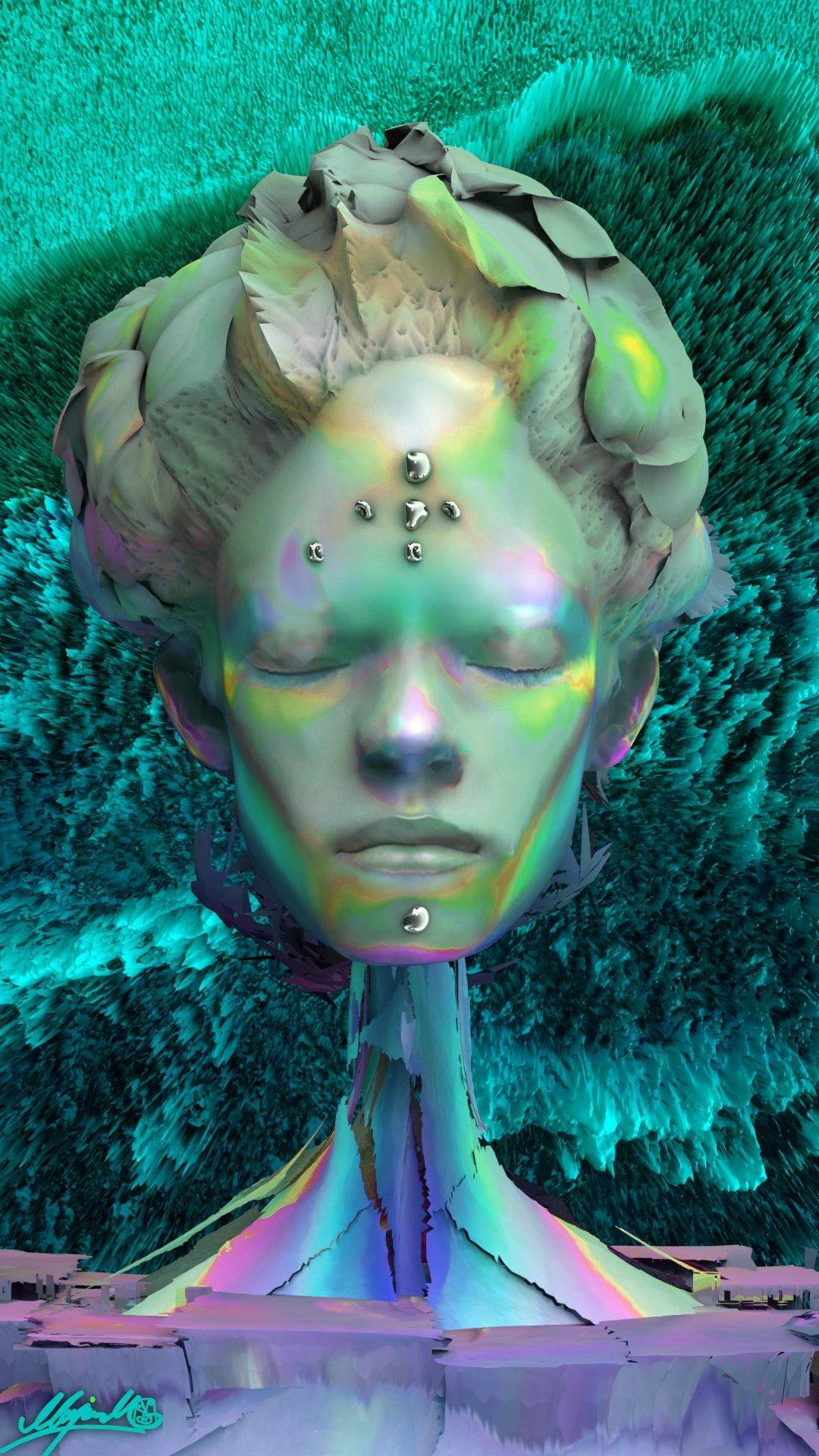 Boy Wonder: A Speaking Silence by Marjan Moghaddam
Auction Is Officially Live: Make Your Bids
The Boy Wonder auction is now live and will remain open for the next 20 days. Collectors have the opportunity to acquire a unique digital artwork created specifically for this drop — each piece shaped through Marjan’s own sculpting, animation, and intentional process.
If you’ve been following her journey, or if her thoughts on authorship and embodied creation struck a chord with you, this is your chance to become part of the story.
The works are available now on her Digital Original storefront. The auction is open. If one of these pieces is meant for you, now’s the moment to make your bid!


