
Fractional Art Ownership Trends 2025
Fractional art ownership is reshaping the way people invest in art. By allowing individuals to purchase shares in high-value artworks, this model opens up opportunities that were once exclusive to the ultra-wealthy. In 2025, this market is thriving, driven by technological advancements, changing investor demographics, and growing institutional interest.
Key Highlights:
- What It Is: Investors buy shares in expensive artworks, similar to owning stock in a company.
- Market Growth: The market grew from almost nothing in 2017 to $500 million in assets by 2024. Experts predict it could reach $5–$10 billion within the next decade.
- Why It’s Popular: Millennials and Gen Z are embracing this model for its accessibility and flexibility. Institutional investors are also using fractional ownership to diversify portfolios.
- Technology’s Role: Blockchain and NFTs ensure secure, transparent ownership and simplify processes like trading and dividend distribution.
- Regulation: Platforms must comply with SEC rules, ensuring investor protection and transparency.
Fractional art ownership is no longer a niche concept - it’s a growing investment trend that’s accessible, flexible, and supported by cutting-edge technology.
Market Growth and Adoption in 2025
The concept of fractional art ownership has evolved from a niche idea into a recognized investment opportunity. Recent data highlights the impressive growth and adoption of this market.
Market Size and Growth Data
The rise of fractional art ownership has been nothing short of extraordinary. Starting with virtually no assets under management in 2017, the market is projected to reach $500 million by 2024. Experts predict this could skyrocket to $5–$10 billion within the next decade.
This growth isn’t just fueled by buzz - it reflects a deeper shift in how people invest in and interact with art. Traditional art markets are also adapting, with trends favoring fractional ownership. For instance, in 2025, sales of artworks priced under $10 million grew by 17%, while the ultra-luxury segment (pieces over $10 million) saw a 39% decline year-over-year. This tilt toward mid-tier art aligns perfectly with fractional ownership, which typically focuses on works valued between $100,000 and $5 million.
The middle market is thriving. Dealers with annual sales under $250,000 reported a 17% increase in 2024, signaling strong activity in price ranges suited for fractional ownership. Additionally, 2025 recorded a three-year high in sell-through rates for day and middle-market auctions, underscoring strong buyer interest.
For many, the high costs of acquiring million-dollar artworks have made fractional ownership a practical way to bring liquidity and accessibility to the art market.
Who is Buying Fractional Art
The rapid growth of this market is matched by an increasingly diverse pool of investors. A closer look at the demographics of fractional art buyers reveals why this trend is gaining momentum, especially as more people embrace digital platforms and alternative investments.
Fractional platforms have lowered the barrier to entry significantly, with minimum investments starting at just $20–$50 per share. This means that even with a modest $500, investors can own shares in prestigious, blue-chip artworks.
Institutional investors are also entering the space in increasing numbers. Family offices, pension funds, and endowments now view art as a viable asset class, appreciating the flexibility fractional ownership offers. These institutions can allocate specific amounts to art without dealing with the logistical challenges of storing or insuring physical pieces.
Mid-tier collectors represent another key group. Previously, these investors might have spent $10,000–$50,000 on individual artworks. Now, fractional platforms allow them to diversify their investments by owning shares in multiple, higher-quality pieces. For example, instead of purchasing a single $30,000 painting, they can invest in shares of several works by renowned artists.
Beyond financial accessibility, fractional platforms provide educational tools and market insights, making it easier for new investors to navigate the art world.
Geography also plays a role in expanding access. While traditional art collecting was often concentrated in cities like New York and Los Angeles, fractional ownership platforms are democratizing participation, enabling investors from across the country to get involved. This shift is opening up opportunities for a much broader audience.
Technology and Regulations
The rise of fractional art ownership is deeply tied to advancements in technology and the shifting landscape of regulatory frameworks. Together, these elements are shaping how investors engage with this market.
Blockchain and Tokenization
Blockchain technology has completely transformed the way fractional art ownership operates. It provides a secure, transparent, and tamper-proof system for recording ownership. When you purchase a fractional share of an artwork, you're essentially buying a digital token that represents your stake. This token is recorded on a decentralized ledger, ensuring transparency and security.
For investors, tokenization simplifies ownership by turning shares into easily verifiable digital records. Smart contracts - automated programs that execute transactions - handle tasks like distributing dividends, transferring shares, and managing co-ownership rights. This automation not only reduces administrative overhead but also minimizes the risk of fraud.
Platforms like Masterworks, Rally, and Arthena are at the forefront of using blockchain to make high-value artworks accessible to a broader audience. Some platforms even offer a hybrid model, combining physical art ownership with NFT certificates, giving investors both a tangible asset and digital utility.
Blockchain has also lowered the entry barriers for art investment. Minimum investments can range from just $20 to $50. Additionally, it supports active secondary trading markets, with typical holding periods of 2–4 years. NFTs (non-fungible tokens) are increasingly used as digital certificates for both physical and digital art, enhancing provenance tracking and improving liquidity.
While blockchain technology ensures secure and efficient transactions, the evolving regulatory environment in the United States plays a critical role in maintaining the market's integrity.
US Regulatory Updates
As technology simplifies the logistics of ownership, compliance with regulations becomes a cornerstone of fractional art platforms. In the U.S., platforms offering tokenized art shares must adhere to securities laws enforced by the SEC, as these shares are often classified as securities. This classification brings with it a host of compliance requirements. Platforms either need to register their offerings with the SEC or operate under exemptions like Regulation A+ or Regulation D, which dictate who can invest, how much they can invest, and the disclosures that must be provided.
Investor eligibility varies depending on the structure of the offering. Some platforms require investors to meet specific income or net worth thresholds, while others allow non-accredited investors to participate under certain exemptions. All platforms must conduct thorough AML (anti-money laundering) and KYC (know your customer) checks, requiring investors to verify their identities and undergo background screenings.
Transparency is another key focus. Platforms disclose essential details about investment risks, fees, and exit strategies. This includes information about an artwork's provenance, condition, insurance, and storage. Additionally, investors must account for tax implications, as the IRS treats these shares as securities, which can involve capital gains and dividend income reporting.
Some platforms, like Masterworks, have gone a step further by registering their offerings directly with the SEC, providing an added layer of investor protection and clarity. As digital assets become more widely adopted, both platforms and investors must stay updated on regulatory changes to ensure compliance and safeguard their investments.
Despite the complexities of regulation, the increased clarity has brought more institutional players into the market, further legitimizing fractional art ownership as a mainstream investment option.
sbb-itb-4e84554
Investment Models and Portfolio Integration
Fractional art ownership brings a variety of investment approaches tailored to different investor goals and risk preferences. As this market evolves, understanding these models and their potential role in a diversified portfolio becomes increasingly relevant.
Types of Investment Models
Platform-based models are at the forefront of fractional art ownership, offering an easy entry point for investors. Platforms like Masterworks, Rally, and Splint Invest let individuals purchase shares for as little as $20–$25 and provide active secondary markets with holding periods of 2–4 years. These platforms handle the acquisition and management of artworks, making them an attractive choice for those seeking a hands-off investment experience.
Direct-to-consumer models cater to investors looking for exclusivity. Typically run by established galleries or auction houses, these models offer fractional shares from their own collections. While the minimum investment is higher - often $1,000 or more - investors gain access to perks like early opportunities to acquire new pieces, exhibition options, and comprehensive provenance information. However, this exclusivity comes at the cost of lower liquidity.
Hybrid models blend traditional fractional ownership with blockchain and NFT technology. These models utilize smart contracts to automate processes, reduce fees, and issue digital certificates of ownership. Some platforms even provide NFT certificates tied to physical artworks, merging the tangible and digital asset worlds.
| Model Type | Minimum Investment | Liquidity | Benefits | Example Platforms |
|---|---|---|---|---|
| Platform-Based | $20–$25 | High | Low entry costs, secondary trading, professional management | Masterworks, Rally, Splint Invest |
| Direct-to-Consumer | $1,000+ | Lower | Exclusive access, expert curation, provenance documentation | Gallery programs, auction houses |
| Hybrid (NFT) | Varies | Varies | Digital certificates, automated processes, reduced fees | Blockchain-based platforms |
These models provide investors with flexibility to balance risk, costs, and liquidity when adding art to their portfolios.
Adding Fractional Art to Investment Portfolios
Fractional art ownership presents a strategic opportunity for portfolio diversification. As a low-correlated alternative asset, art can help reduce overall portfolio volatility. Many investors allocate 5–15% of their portfolios to art, with some institutional players going as high as 25%.
Family offices, pension funds, and endowments are increasingly turning to fractional art ownership as a way to access this asset class without the complexities of direct ownership. This growing institutional interest is also helping to stabilize the market.
By enabling investments across multiple artworks instead of concentrating funds in a single high-value piece, fractional ownership supports effective risk management. Diversifying across artists, periods, and styles can reduce the impact of any single artwork underperforming.
The market for fractional art ownership has grown rapidly, from nearly nonexistent in 2017 to managing an estimated $500 million in assets by 2024. Projections suggest this could expand to $5–10 billion within the next decade. This growth reflects increasing recognition of art as a legitimate alternative investment.
To successfully integrate fractional art into a portfolio, investors should conduct thorough research on platform offerings, fee structures, and the provenance of artworks. This attention to detail ensures they can meet their allocation goals while maintaining a balanced and diversified investment strategy.
Platforms and Tools for Fractional Ownership
The rising interest in fractional art ownership has created a need for platforms that can handle secure transactions, automate smart contracts, and verify digital ownership seamlessly.
Digital Original: Features and Benefits
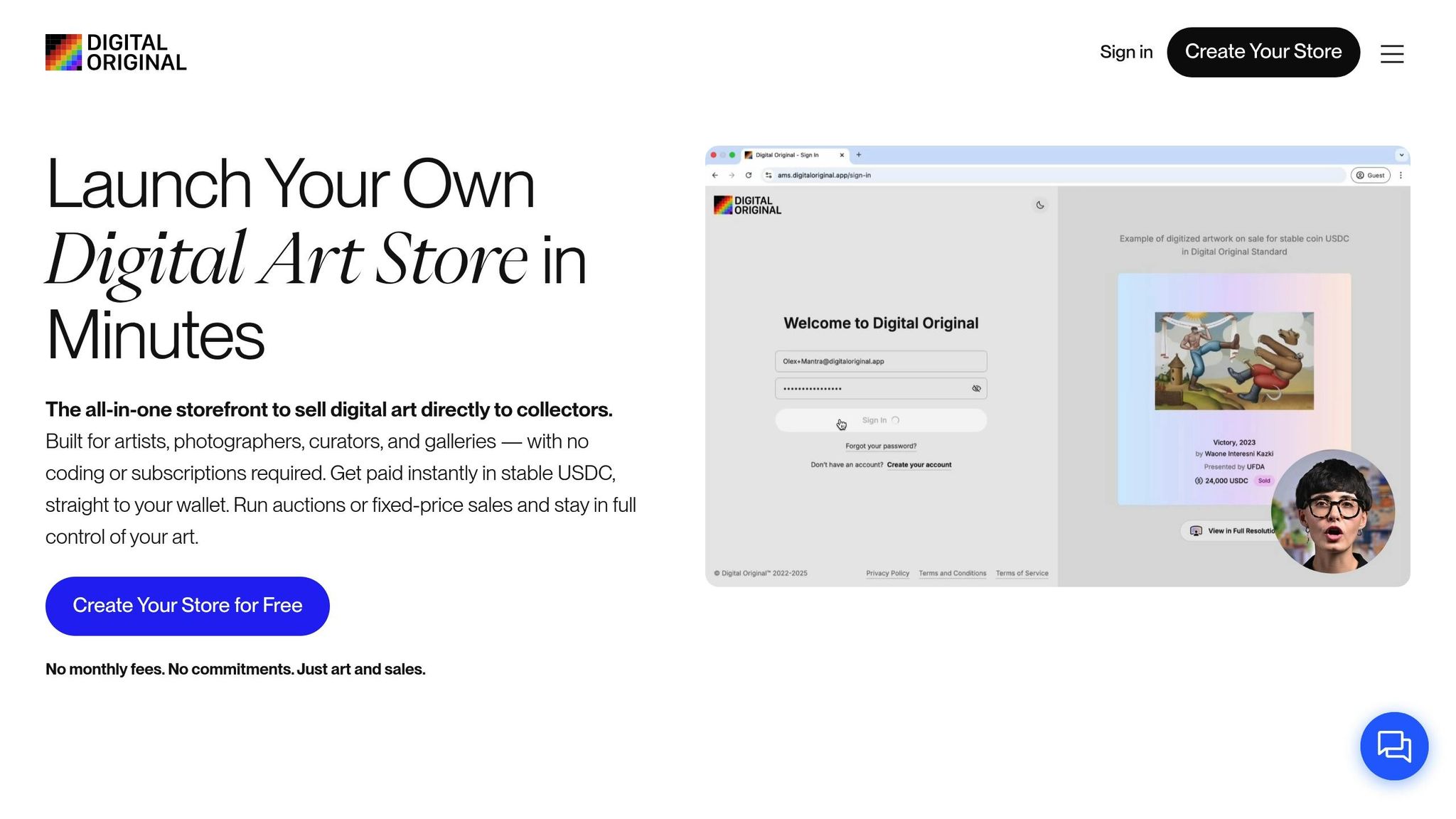
Digital Original taps into cutting-edge blockchain technology to simplify fractional art transactions. By automating smart contracts, the solution records and verifies ownership instantly on-chain, ensuring every transaction is both secure and unchangeable.
One standout feature is the instant USDC payouts, which provide immediate payment upon the completion of a sale, improving cash flow for artists and galleries. Additionally, automated royalty management ensures that revenue from both primary and secondary sales is distributed effortlessly, eliminating the need for manual oversight and creating consistent income streams.
For those without blockchain expertise, Digital Original offers a no-code storefront setup. This allows artists and galleries to launch fully operational art storefronts without technical obstacles. Digital Original caters to both digital-native artworks and digitized physical pieces, using DLCT to digitally represent physical works with exceptional clarity.
These features collectively demonstrate why Digital Original has become a key player in the fractional art market.
Future Outlook for Fractional Art Ownership
The fractional art ownership market is expected to grow significantly in 2025, with analysts projecting an increase from $500 million in assets under management in 2024 to somewhere between $5–10 billion over the next decade.
This anticipated growth is fueled by a mix of factors, including strong interest from millennials and Gen Z, as confirmed by recent surveys.
Technology Integration and Market Evolution
Digital platforms are giving artists more control over their work by enabling direct sales to collectors and introducing features like anti-speculation timers and standardized royalties. These tools help maintain long-term value and promote sustainable practices in the market. As technology advances, institutional investors are paying closer attention, signaling a shift toward larger-scale portfolio integrations.
Institutional Adoption and Portfolio Integration
Thanks to these technological developments, institutional investors - such as family offices, pension funds, and endowments - are increasingly viewing fractional art ownership as a viable way to diversify their portfolios. Typically, alternative assets like art make up 5–15% of an optimal portfolio, with some institutions allocating as much as 25%. The 2025 Deloitte Art and Finance Report highlights the growing strength of the mid-tier art market and identifies fractional ownership as a key driver of accessibility.
Regulatory Clarity and Market Maturation
As regulatory frameworks become more defined, investor confidence in fractional art ownership is expected to rise. Many platforms are aligning with MiCA-compliant structures and adopting stablecoins like USDC to reduce the risks associated with cryptocurrency volatility. Additionally, a trend toward dual ownership models - where both physical and digital versions of artwork hold independent value - is reshaping the market landscape.
Market Challenges and Opportunities
While the outlook is promising, challenges remain. Regulatory uncertainties and a lack of widespread investor knowledge about digital wallets are hurdles the market must overcome. The 2024 market contraction highlighted the importance of effective risk management. However, these challenges also present opportunities to improve transparency and foster growth.
For example, in 2024, co-owners of a fractionalized artwork achieved an early exit by accepting an unsolicited offer that exceeded the predicted two-year value increase after just 1.5 months. This case study underscores the potential for success in this market.
Galleries and auction houses are expected to expand direct-to-consumer programs, offering perks like early access to new pieces and detailed provenance records. Meanwhile, AI valuation tools and advanced data analytics are helping to minimize risks and enhance transparency.
With advancing technology, clearer regulations, and changing investor demographics, the art investment landscape is becoming more accessible, liquid, and professionally managed. Solutions like Digital Original are well-positioned to lead this transformation.
FAQs
How is fractional art ownership different from traditional art investment?
Fractional art ownership lets investors collectively purchase shares in a single artwork, instead of buying the entire piece on their own. This approach differs from traditional art investment, where an individual typically buys and owns an artwork outright.
One of the key benefits of fractional ownership is that it lowers the financial barrier, allowing you to invest smaller amounts and still gain access to high-value art. Plus, these investments often leverage digital platforms and blockchain technology, offering more transparency and simpler management compared to traditional avenues like private sales or auctions.
What are the risks and benefits of fractional art ownership for individual investors?
Fractional art ownership opens the door to investing in high-value artworks that might otherwise be out of reach. It’s an appealing option for those looking to diversify their portfolios while potentially benefiting from the long-term appreciation of art. Plus, it offers a hassle-free way to engage with the art market - there’s no need to worry about the logistics of storing or maintaining physical pieces.
That said, there are some risks to keep in mind. Art values can be unpredictable, with market trends shifting over time. On top of that, fractional ownership often comes with platform or management fees, which can eat into returns. Liquidity is another concern - selling fractional shares isn’t always quick or straightforward.
If you’re considering this type of investment, take the time to dig into the platform’s details, understand the ownership terms, and assess the market potential of the artwork in question. A little homework can go a long way in navigating this unique investment space.
How does blockchain technology ensure the security and authenticity of fractional art ownership?
Blockchain technology plays a crucial role in safeguarding fractional art ownership by maintaining a transparent and unchangeable record of every transaction. Each fractional share is transformed into a tokenized digital asset and securely stored on the blockchain. This creates a permanent and clear ownership history, effectively eliminating the possibility of unauthorized changes.
On top of that, many blockchain platforms utilize smart contracts to streamline processes such as share transfers, payouts, and compliance checks. These automated contracts minimize the risk of fraud and ensure that every ownership agreement is carried out exactly as intended. With this technology in place, fractional art ownership becomes a safer and more reliable option for investors.


