Digital Art Storefronts: The New Revenue Stream for Artists


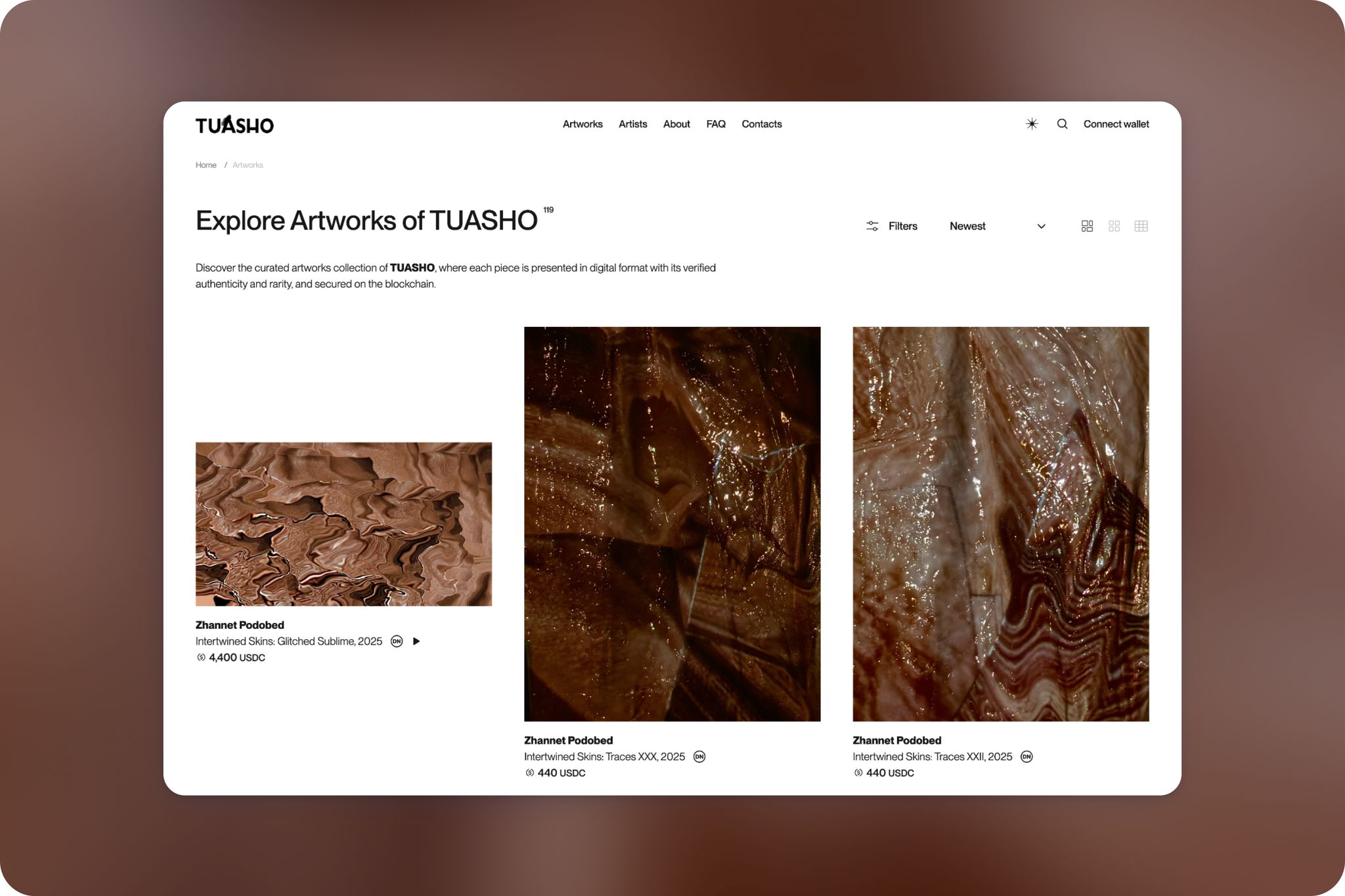
Digital Art Storefronts: The New Revenue Stream for Artists
Digital art storefronts let artists sell directly to buyers, cutting out high gallery fees (30%-60%) and marketplace commissions (up to 45%). Artists gain full control over pricing, branding, and customer relationships, leading to higher profits and more autonomy. These storefronts support multiple income streams, including digital downloads, print-on-demand merchandise, subscriptions, and resale royalties.
Key benefits include:
- Low fees: Only 3%-5% on most platforms.
- Instant payouts: No waiting for sales revenue.
- Ownership of customer data: Build lasting collector relationships.
- Scalability: Unlimited sales with minimal overhead.
Marketplaces often limit control and charge high fees, while storefronts provide a personalized, direct sales channel. Artists who embrace this model can increase earnings, streamline operations, and grow their brand effectively.
Introduction: Why Artists Need Digital Art Storefronts
Selling digital art shouldn’t mean giving up a big chunk of your earnings or getting lost in a sea of other creators. Traditional galleries often take hefty commissions - ranging from 30% to 60% - and online art platforms like Artfinder and Saatchi Art charge 40% to 45% in fees. Even craft-focused marketplaces like Etsy tack on a 6.5% transaction fee, not to mention listing costs.
But fees are just one part of the problem. When artists rely on third-party platforms, they lose control over critical aspects of their business - like pricing, branding, and direct connections with buyers. Galleries limit your selling options, while marketplaces prioritize their own branding, making it hard for individual artists to stand out. These limitations make a strong case for why artists are seeking more independent ways to sell their work.
A digital art storefront empowers you to set your own prices, maintain ownership of customer data, and build a distinct brand identity. Instead of competing with thousands of other artists on a shared platform, you can create a dedicated space where your work is the star. Plus, with no need for physical inventory or shipping, your overhead stays low, maximizing your profits.
This approach is catching on, especially among emerging artists. Smaller art dealers - those with annual revenue under $250,000 - saw a 17% jump in sales in 2024, thanks to direct-to-collector models. By taking control of their storefronts, artists are not only creating sustainable income but also preserving their creative freedom.
What Is a Digital Art Storefront?
A digital art storefront is more than just a portfolio - it’s an ecommerce platform where artists can sell their work directly to buyers. Unlike a simple gallery that only showcases your creations, a storefront comes equipped with tools for payment processing, instant digital delivery, and transaction management. In essence, it transforms your website into a full-fledged sales hub.
This type of storefront is perfect for generating passive income from digital art. Once you upload your artwork and set a price, the platform takes care of everything: processing payments, delivering files, and verifying ownership.
What really sets a digital art storefront apart is the autonomy it offers. Instead of competing for visibility on crowded marketplaces, you control your branding, pricing, and customer relationships. This independence allows you to manage your sales process while keeping more of your revenue.
Core Features of a Digital Art Storefront
A well-designed digital art storefront offers several key features to simplify sales and protect your work:
- Automated digital delivery: Buyers instantly receive high-resolution files after completing their purchase, eliminating the need for manual file sharing and ensuring a seamless experience.
- Blockchain ownership verification: By minting an NFT, you create a digital receipt that certifies the buyer owns the original version of your artwork. This is particularly important in a world where digital files can be easily duplicated.
- Security measures: To safeguard your work, you can display low-resolution previews and reserve high-quality versions for paying customers, reducing the risk of unauthorized downloads.
- Integrated sales tools: Features like royalty settings for secondary sales, membership-only areas for recurring revenue, and print-on-demand options for physical products (e.g., posters or t-shirts) add versatility to your storefront. These tools streamline operations and ensure your work is protected and monetized effectively.
Why Verified Digital Ownership Matters
One of the biggest challenges in digital art is proving authenticity. Since digital files can be copied perfectly, collectors need reassurance that they’re purchasing the original piece. Blockchain technology addresses this by creating a transparent, permanent record of ownership.
This verification process doesn’t just protect authenticity - it also opens the door to resale royalties. When a collector resells your work, you can automatically earn a percentage of the sale. For collectors, the transparency of ownership records adds trust and makes digital art a more appealing investment.
Why Digital Art Storefronts Are a New Revenue Stream for Artists
Digital art storefronts are changing the game for artists looking to generate income. Traditional galleries often take hefty commissions - anywhere from 30% to 60% - while platforms like Artfinder charge 40% to 45%. In contrast, running your own storefront allows you to keep the lion's share of your earnings, with transaction fees typically ranging from just 5% to 15%, and in some cases, 0% for self-managed orders.
This shift isn’t just about saving money - it’s about gaining control. With your own storefront, you set your prices and own your customer data, which makes acquiring repeat buyers far more cost-effective than constantly chasing new ones.
A digital storefront also eliminates the physical barriers that once limited an artist’s reach. You don’t need to worry about inventory, shipping, or regional restrictions. Your art can be available to buyers in Tokyo, New York, and Berlin simultaneously, 24/7, without increasing your operating costs.
Multiple Revenue Streams from One Storefront
Your storefront can be more than just a place to sell art - it can become a hub for multiple income streams. You could sell original digital works, limited edition prints, downloadable open editions, or even physical merchandise like posters or t-shirts through print-on-demand services. Each of these options attracts different types of buyers at varying price points.
What’s more, digital storefronts enable artists to benefit from the secondary market. When collectors resell your work, you can automatically earn a percentage of that sale - a revenue opportunity that traditional art sales rarely offer. As your collector base expands, these income streams grow without requiring extra effort on your part.
Take Megh Knappenberger, for example. She launched her own storefront in 2017 and used automation tools to streamline her business. By owning her customer relationships, she grossed over $200,000 in her first year as a full-time artist and has consistently maintained six-figure annual sales ever since.
Direct Sales and Pricing Control
Running your own storefront means you control the entire sales process. This allows you to focus on building a brand that resonates emotionally with your audience, rather than competing solely on price. Buyers aren’t just comparing dollar amounts - they’re deciding if your work speaks to them.
By fostering direct communication with collectors, you can build loyalty that leads to repeat purchases and word-of-mouth referrals. You can also offer custom commissions, early access to new collections, or exclusive membership tiers - strategies that increase the lifetime value of each customer. This personal connection justifies higher prices because buyers see themselves as investing in you, not just your art.
Low Overhead and High Scalability
One of the biggest advantages of digital storefronts is scalability. Once you upload a digital artwork and set your price, that piece can sell to an unlimited number of buyers without any additional production costs. There’s no need for printing, framing, or shipping unless you choose to offer physical products, which can also be automated.
The math is simple: your costs remain steady, but your revenue potential is unlimited. Whether you sell 10 pieces or 10,000, your expenses don’t increase proportionally. This scalability is one reason why digital art sales are projected to hit nearly $12 billion by 2025.
Automation takes care of the hard work. Buyers receive high-resolution files instantly, blockchain certificates are issued automatically, and print-on-demand orders are handled without your involvement. This allows you to spend more time creating and less time managing logistics, turning your storefront into a passive income stream. With these tools, artists are reclaiming control over their careers while building sustainable revenue models.
Digital Art Storefronts vs. Marketplaces: What Artists Need to Know
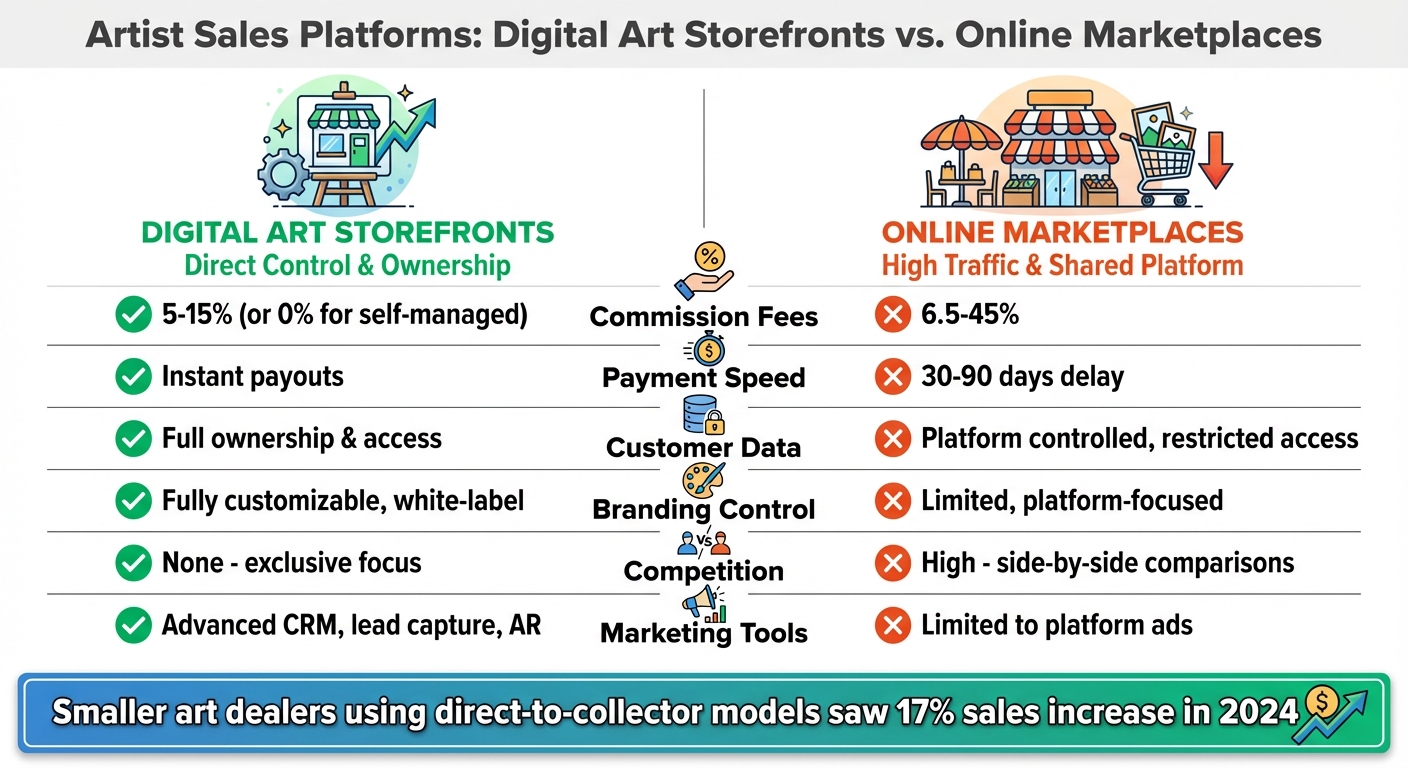
Digital Art Storefronts vs Marketplaces: Fees, Control, and Payout Comparison
Marketplaces like Etsy or Artfinder showcase your work alongside countless other artists, while a digital art storefront gives you complete control over a personalized sales channel under your own URL. This means every visitor and customer interaction is yours to manage and analyze, offering a distinct advantage in terms of control, fees, data access, and payment speeds.
Ownership and Customer Relationships
One of the biggest differences lies in ownership. Selling through a marketplace limits your control over the customer relationship because the platform owns the data and branding. Access to buyer contact details is often restricted. On the other hand, with your own storefront, you have full access to customer data. This allows you to build targeted marketing campaigns, nurture loyalty, and encourage repeat purchases.
Pricing, Fees, and Payments
Marketplaces often create a competitive environment where artists feel pressured to lower prices as buyers compare similar works side by side. Commission fees vary widely, with some platforms charging as little as 6.5% per sale, while specialized art marketplaces can take anywhere from 40% to 45%. By contrast, digital art storefronts typically charge 5% to 15% in transaction fees, and some plans even offer 0% fees for self-managed sales.
Another critical difference is payment timing. Storefronts usually provide immediate payouts when a sale occurs, while marketplaces often delay payments. Artists may have to wait 30 to 90 days or meet a minimum earnings threshold before receiving funds. This delay can create challenges for managing cash flow. For instance, NBA Top Shot - a dedicated digital storefront - has processed over 500,000 transactions, totaling approximately $1 billion in sales volume. This example highlights the scalability and financial control possible with your own sales channel.
Comparing Key Features
Here’s a quick breakdown of the major differences between marketplaces and digital art storefronts:
| Feature | Online Marketplace | Digital Art Storefront |
|---|---|---|
| Customer Data | Controlled by the platform | Fully accessible to the artist |
| Branding | Limited customization, platform-focused | Fully customizable to reflect your identity |
| Competition | High; competing works displayed side by side | None; exclusive focus on your work |
| Fees | 6.5%–45% commission | 5%–15% transaction fees (or 0% for self-managed sales) |
| Payment Speed | Delayed (30–90 days or minimum threshold) | Instant payouts upon sale |
| Marketing Tools | Limited to platform ads | Advanced tools like CRM, lead capture, and AR |
This comparison underscores the advantages of owning a digital art storefront, especially for artists looking to establish a sustainable and scalable business model.
sbb-itb-4e84554
Limitations of Marketplaces
Marketplaces may seem like a convenient option, but they come with some tough challenges that can seriously impact your business. One of the biggest hurdles? High commission fees. These can range anywhere from 10% to 15%, and on some platforms, they can skyrocket to 40%-45%. These fees leave you with a tough choice: either raise your prices and risk losing customers or absorb the cost and watch your profit margins shrink.
Then there's the issue of intense competition. Your work often ends up side by side with lower-priced alternatives, and in that scenario, price tends to be the deciding factor. This makes it nearly impossible to position your work as a premium offering, as buyers are constantly comparing options.
Visibility is another major challenge. If you don't already have a strong following, your work can easily get buried. Marketplaces often favor high-traffic artists and influencers, leaving emerging creators struggling to get noticed. On top of that, algorithm changes can undo months of hard work, making it even harder to gain traction.
Another downside is the loss of control over your brand and customer data. Most marketplaces don’t share buyer information, which means you can’t build long-term relationships with collectors. Worse yet, your work might be displayed alongside lower-quality pieces, potentially harming your professional reputation. Unlike storefronts, where you fully control how your brand is presented and how you connect with your audience, marketplaces strip away that control.
Ultimately, relying solely on a marketplace is like renting space on someone else’s platform. You don’t own the customer relationships, the data, or even the analytics. This leaves you vulnerable to sudden fee hikes, policy shifts, or platform changes that can negatively affect your business without warning.
Comparison Table: Storefronts vs Marketplaces
When it comes to selling your art, the choice between storefronts and marketplaces isn't just about fees - it's about control, branding, and how quickly you can access your earnings. Here's a closer look at how these two options stack up:
| Feature | Artist-Controlled Storefronts | Online Marketplaces |
|---|---|---|
| Primary Fee Type | Monthly/Annual Subscription | Per-sale Commission |
| Commission Rate | Low (typically 0%–15%) | High (typically 15%–45%) |
| Setup Cost | Can be high ($1,000+) | Usually low or free |
| Payout Timing | Immediate | Delayed (30–90 days) |
| Customer Data | Artist owns data | Marketplace owns data |
| Branding | Full "white-label" control | Marketplace branding dominant |
| Pricing | Total control; no direct comparison to rivals | High competition; often leads to price wars |
| Traffic | Artist must drive traffic (SEO, Social, Ads) | Built-in audience and high existing traffic |
For artists, the numbers tell a compelling story. Marketplaces like Saatchi Art and Artfinder can take 40% to 45% of each sale, while storefronts often charge only 0% to 15%. That difference dramatically increases your earnings per sale. Plus, immediate payouts through storefronts allow you to reinvest in your business right away, unlike marketplaces, where payout delays of 30 to 90 days can slow your momentum.
Another major advantage of storefronts is owning your customer data. Having access to buyer information - like email addresses and purchase history - means you can build relationships and encourage repeat purchases. On marketplaces, this data stays out of reach, forcing you to start fresh with every new sale.
Ultimately, owning a storefront gives you the tools to grow your business on your own terms, from setting prices to building a loyal customer base. Marketplaces may offer convenience, but the trade-offs in control and profit can be steep.
Key Takeaways: Building Revenue with Digital Art Storefronts
Running your own digital art storefront gives you control over your sales, pricing, and connections with collectors. One of the biggest advantages? You avoid the hefty commissions traditional galleries charge - typically between 30% and 60%. In contrast, artist-focused platforms often take just 3% to 5% per sale.
Having multiple revenue streams is another benefit. You can cater to a variety of buyers by offering a mix of high-value originals, limited edition prints, digital downloads, and even subscription-based access to exclusive content or tutorials. Selling digital files is especially appealing since they can be purchased repeatedly without the hassle or cost of shipping.
Another major perk is owning your customer data. A dedicated storefront allows you to build an email list and track the buying habits of your collectors. This means you can directly share updates, announce new releases, and encourage repeat purchases - all without battling marketplace algorithms.
The numbers back this up. In 2024, smaller art dealers with annual sales under $250,000 saw a 17% increase in revenue. This highlights how independent artists can thrive when they approach their storefront like a professional business.
Platforms like Digital Original make setting up your storefront straightforward. There are no setup costs, and you only pay a small fee per transaction (5-15%). Payments are instant in USDC, and the platform includes verified digital ownership. Plus, you don’t need any technical expertise - there are no monthly fees cutting into your earnings, either.
FAQs
How can artists protect their digital art from being stolen or misused?
Artists can take steps to protect their digital art by combining visible branding, legal measures, and regular monitoring. Here’s how:
- Watermarks and Branding: Add a watermark or your logo directly to your artwork. Include a clear copyright notice (e.g., © Your Name, Year). This not only discourages unauthorized use but also reinforces your ownership.
- Copyright Registration: Officially register your copyright with the U.S. Copyright Office or the relevant authority in your region. This gives you stronger legal standing and the ability to issue DMCA takedown notices if your work is misused.
- Metadata Embedding: Embed important details like your name, copyright information, and contact details into the file’s metadata. This way, even if the visible watermark is removed, your ownership information remains tied to the file.
- Reverse-Image Searches: Use tools like TinEye or Google Lens regularly to search for unauthorized use of your artwork. If you find copies being used without permission, act quickly to address the situation.
By layering these protective measures, you can reduce the risk of theft and ensure you have the tools to respond if your work is misused.
What should I look for in a digital art storefront platform?
When selecting a digital art storefront platform, it's essential to focus on features that simplify the selling process while boosting efficiency and profitability. Here are some key elements to keep in mind:
- Quick and low-cost payouts: Opt for platforms offering speedy payment options, such as direct transfers or cryptocurrency, to avoid delays and hefty fees.
- Easy setup without coding: Look for user-friendly tools like drag-and-drop editors or pre-made templates that let you get your storefront up and running without technical expertise.
- Customizable design: A platform that lets you personalize your storefront’s look ensures your brand and artwork collections stand out.
- Direct sales to collectors: Features like private checkout links or exclusive access for collectors allow you to sell directly to buyers, keeping more of your profits.
- Clear and upfront pricing: Platforms with minimal fees or no commissions help you retain a larger share of your earnings.
These tools give digital artists the confidence to sell their creations while keeping control over both their artistic vision and income.
How do digital art storefronts give artists more control and higher earnings compared to traditional galleries?
Digital art storefronts give artists more control over their work and a much larger share of their earnings compared to traditional galleries. In a gallery setting, artists often lose 40%–60% of each sale to commission fees, leaving them with only a portion of the revenue.
With a personal digital storefront, artists have the freedom to set their own prices, decide which pieces to showcase, and manage the entire sales process. Whether it’s through limited-edition releases, bundles, or direct sales to collectors, they’re in charge. Plus, without a middleman taking a hefty cut, artists can keep the full sale price or, at most, pay a small platform fee. Some platforms even waive commissions entirely, allowing creators to keep 100% of their earnings.
This direct-to-collector approach doesn’t just increase revenue - it also lets artists control their branding, build direct relationships with buyers, and shape the overall purchasing experience. Digital storefronts are proving to be a game-changing alternative to the traditional gallery model.


