In short
You do not need to post every day or turn your life into content. The practical way to promote your art online is a small system you can maintain.
It has three parts: one professional artist website, one main discovery channel and a weekly rhythm built around the work you are already making. This approach to art marketing gives each artwork more chances to be seen, while interested viewers always have a clear place to continue. It builds an online presence without daily posting.
You do not need to publish everywhere
Artists need a clear path from first discovery to deeper interest — not the habits of a full-time influencer.
Social media can introduce your work to new people, but it rewards constant activity and makes every post temporary. Trying to satisfy several platforms can take more time than the work itself.
A smaller system is easier to maintain. Use one platform to attract attention, your artist website to present the complete practice and one direct channel, such as email, for people who want to stay connected. Each channel has one clear job. This is the core of how to build an online presence as an artist.
Decide what each publication should do
Decide what you want people to do after seeing your work.
An artist seeking commissions needs a different path from an artist selling editions. A photographer looking for commercial work has different priorities from a digital artist building an audience of art collectors. An artist who wants to sell art online needs a clear purchase path on every artwork page.
Choose one primary result for the next three months. It might be portfolio visits, purchase requests, exhibition invitations, commissions or mailing list signups. This decision makes it easier to choose where to publish and what to measure.
Give each channel a clear role
A simple system has three parts: one place to be discovered, one professional home for the work and one direct way to stay in touch.
Instagram works well for visual updates and studio activity. Video platforms suit processes that are naturally interesting in motion. Pinterest can support long-term visual discovery. LinkedIn can help with professional commissions and partnerships.
Choose the channel that fits your work and communication style. Add other platforms only when the same material can be reused without creating a second production schedule.
Your art portfolio website should remain the stable destination. It can hold complete series, high-resolution images, biography, context, availability and contact options without forcing the work into a feed.

Artworks by Yevhen Zaiets, presented on Digital Original.
Begin with the work itself
One artwork can offer several distinct ways into the work, without forcing you to invent unrelated topics. The same source material can fill a month of artist blog and social media content.
Start with material that already exists around the work. A finished image, close detail, studio photograph, process clip, sketch, source note or short explanation can each reveal a different part of the same project.
-
Publish the complete artwork and its basic information.
-
Show one detail that disappears at feed size.
-
Explain one decision about material, colour or composition.
-
Share a short process fragment or studio view.
-
Connect the work to the larger series.
-
Invite viewers to see the full work or ask about availability.
Yevhen Zaiets works this way across one series. His conceptual photography shares a single visual language, so each artwork can be introduced on its own while still pointing back to the series on his artist website.
These are not six unrelated content ideas. They are six entry points into one artwork.
Yehor Shustyk
PM @Digital Original

Artworks by Yevhen Zaiets, presented on Digital Original.
Choose a rhythm you can sustain
A steady weekly rhythm is enough when every publication leads somewhere useful.
Set aside 60 to 90 minutes. Choose one work, prepare one main post, share one supporting detail, update the relevant artwork page and respond to genuine questions. Keep the routine small enough to continue during busy studio periods.
Consistency means that people can find current work and understand where to go next. It does not require daily visibility.
Give interested people somewhere to go
Every publication should give an interested viewer one clear next step.
Ask viewers to explore a complete series, see the work in full resolution, read the project story, join the mailing list or request information. Use one action at a time. A clear next step is more useful than several competing links.
Look beyond likes and follower counts
Look for actions that show someone moving from a quick impression towards genuine interest.
-
Visits to artwork and series pages
-
Returning website visitors
-
Traffic from search and social platforms
-
Contact and purchase requests
-
Mailing list signups
Follower count can provide context, but it does not show whether people are studying the work or taking the next step.
Let your website hold the complete practice
Your website is the stable centre of the system: the place where a passing impression can become a closer look. This is why every visual artist needs their own website.
A social post may receive a few seconds of attention. A well-structured artwork page allows someone to examine the work, understand its context and contact the artist without searching across several services.
Search is the channel that keeps working after a post disappears. An artwork page with a clear title, medium, year and description can be found in Google months after publication, and AI assistants such as ChatGPT and Perplexity read the same structured pages. A custom domain strengthens that search visibility.
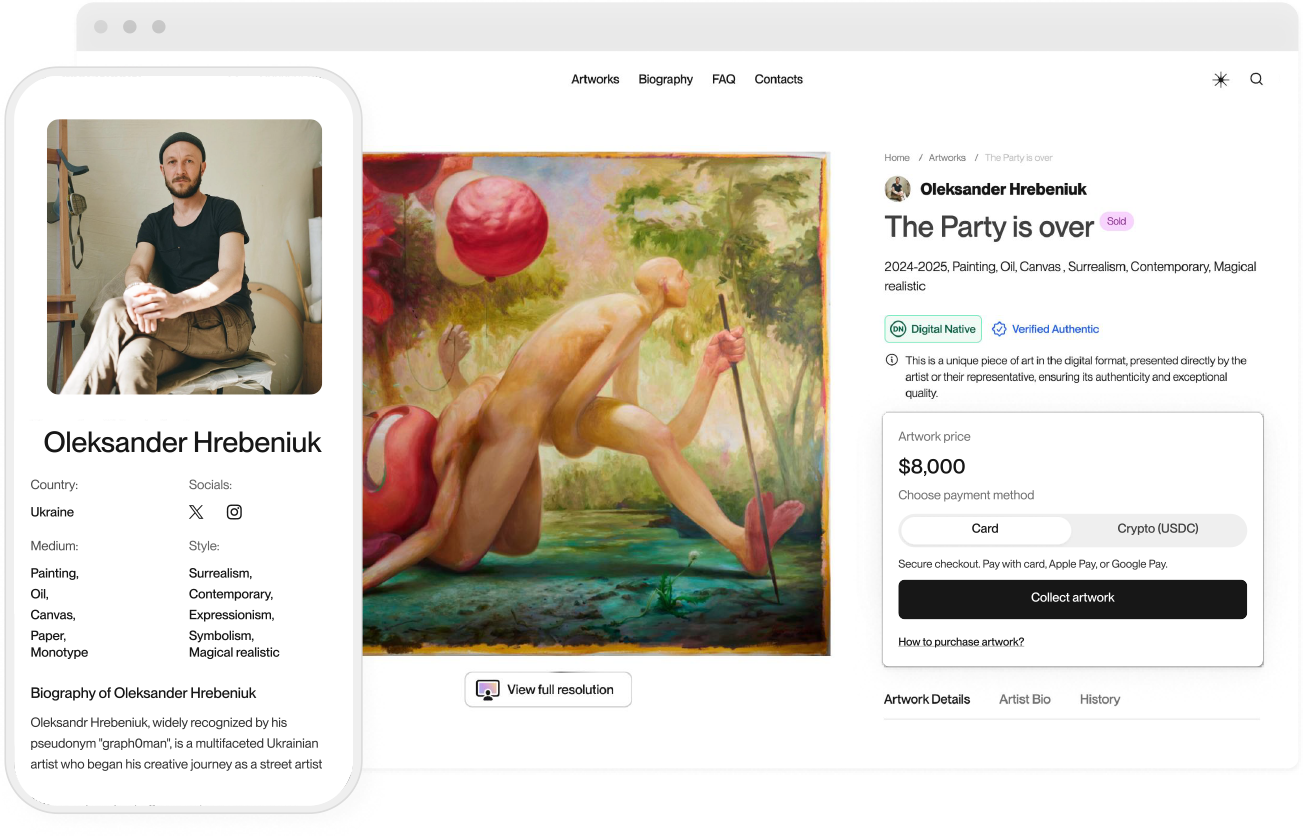
Digital Original keeps full-quality artwork presentation, Deep Zoom, search-ready pages, analytics, sales tools and your own domain in one place. The system stays simple, while the work has room to be seen properly.