TL;DR: Artists need their own website because it is the one place they fully control: a professional home for their biography, a properly documented art portfolio, and a single link that makes their work findable. Social profiles rent you attention; a website builds a presence that is yours and that search engines and collectors can find on your terms.
A website is your home base, not another profile
Direct Answer: A website is the only space online that fully belongs to you. Social platforms decide how your work appears, who sees it, and what survives the feed. A website lets you present your identity and your art on your own terms.
Most digital artists live inside platforms they do not own. Instagram sets the crop. The algorithm sets the reach. Last year's posts vanish under this week's.
A professional artist website reverses that. It is your home page on the internet: who you are, where you have exhibited, the styles you work in, and the story behind the practice.
This is where a serious biography lives — not a 150-character bio line, but the full arc of your work. Presentation defines perception, and a home you control is the first act of that presentation.

Your portfolio, documented properly
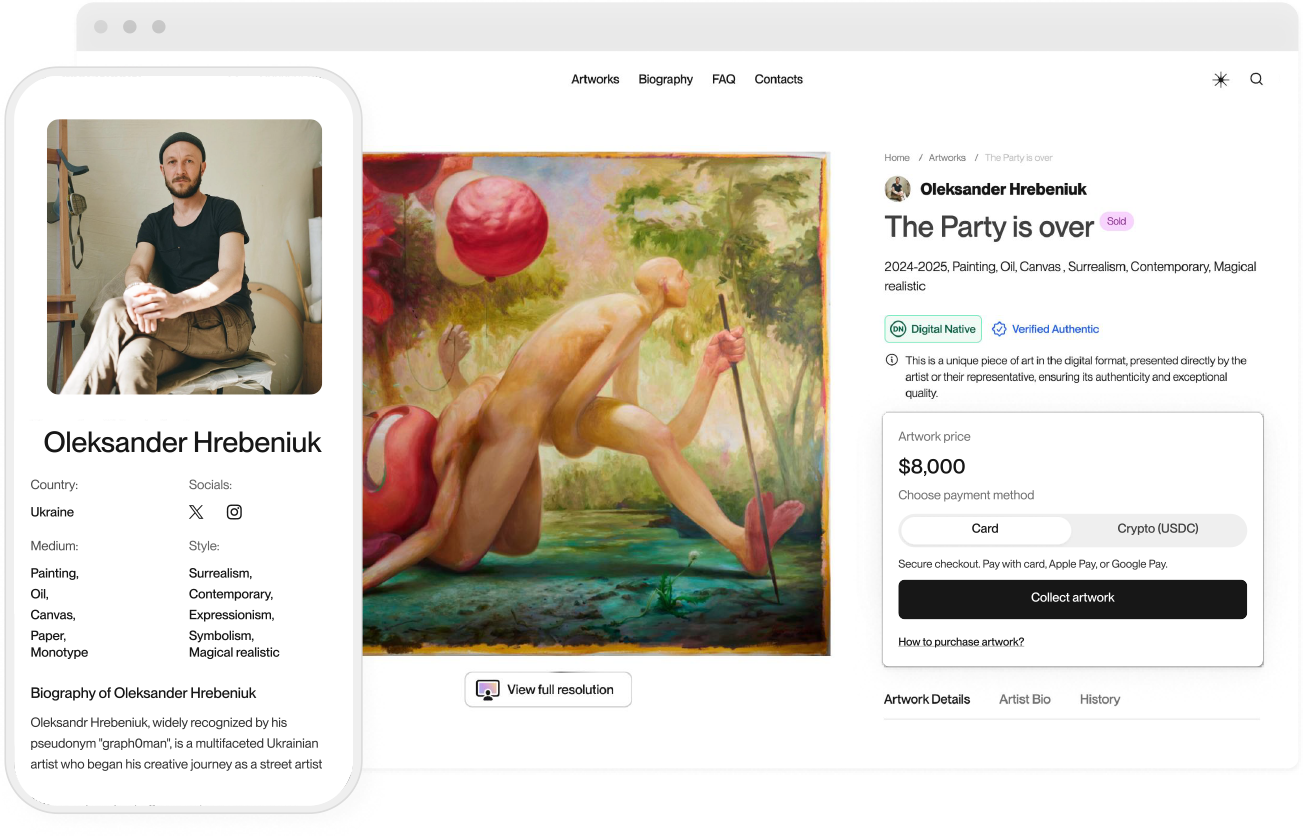
Direct Answer: A website turns scattered images into a structured, documented portfolio. Each work carries a title, year, description, classification, and a high-resolution image — the metadata that lets both people and search engines understand your art.
Scattered work reads as unfinished work. Files on a marketplace, an abandoned site builder, a half-migrated profile — none of it reads as a body of work.
A proper artist portfolio website treats every piece with the same care you gave the work itself. Each entry is described, dated, and classified. Groups of related works — a series, or a set built around one idea — can be presented together as a coherent statement.
That structure matters beyond aesthetics. Clear metadata and markup are what let your work be indexed, found, and understood correctly. Documentation is also a form of respect for your own art.
|
What lives on your website |
What it does for you |
|---|---|
|
Full biography and exhibition history |
Establishes you as an artist, not a feed |
|
Individual works with year, description, classification |
Makes each piece legible to viewers and search engines |
|
Selections (grouped series or bodies of work) |
Presents ideas as coherent statements, not loose posts |
|
High-resolution images with Deep Zoom |
Lets viewers explore texture and scale instead of scrolling past |
|
Structured metadata and markup |
Helps your art get indexed and discovered |
Discoverability: how a website makes your art findable
Direct Answer: A website with a custom domain is what makes your art findable through search and AI answer engines. Structured pages and clean metadata let search engines index your work, so people looking for an artist like you can actually reach it.
A profile inside a platform is discoverable only inside that platform. A website is discoverable across the open internet, where Google and AI answer engines can index it.
This is where a custom domain matters most for SEO. Your site starts on a Digital Original subdomain, but a custom domain — bought from any registrar such as Namecheap or GoDaddy — is what gives it a stable, indexable, professional address.
Connecting a domain is simple and safe, and the Digital Original team will guide you through it if you want a hand. Once connected, everything you publish sits under one findable home.
Based on Digital Original platform data (2026), works presented with Deep Zoom hold viewer attention 2.4× longer than a standard image grid — attention that a findable, well-structured page turns into recognition.
One link for open calls, galleries, and collectors
Direct Answer: Your website is a single link you can send anywhere — open calls, gallery submissions, social bios, or a collector's inbox. Instead of scattered screenshots, one address holds your entire practice in a form worth reviewing.
Opportunity moves fast. An open call, a curator's question, interest from art collectors — each one asks the same thing: show me your work.
With a website, the answer is one link. It carries your biography, your full portfolio, and your best works at full quality. In a social post or story, you can point to a single artwork so people can see it properly instead of a compressed thumbnail.
This applies equally to photographers and to painters and illustrators. You spent real time and talent making the work. The way you present it should match that effort.
"Artists rarely lose opportunities because the work is weak. They lose them because the work is scattered across five places and never seen whole. One home fixes that."
Yehor Shustyk, Product Lead at Digital Original
Beyond the portfolio: insight, immersive presentation, and income
Direct Answer: A modern artist website does more than display work. It shows you how your audience engages, lets you present work in immersive XR when you are ready, and gives you the option to earn from your art — without ever forcing sales to the front.
A website is also a source of quiet intelligence. You can see how many people visit, which works they spend time on, and where they came from. That insight tells you what resonates.
For artists who look ahead, immersive presentation adds another dimension. You can build spatial XR galleries that a global audience — and your collectors — can explore remotely, at no cost to them.
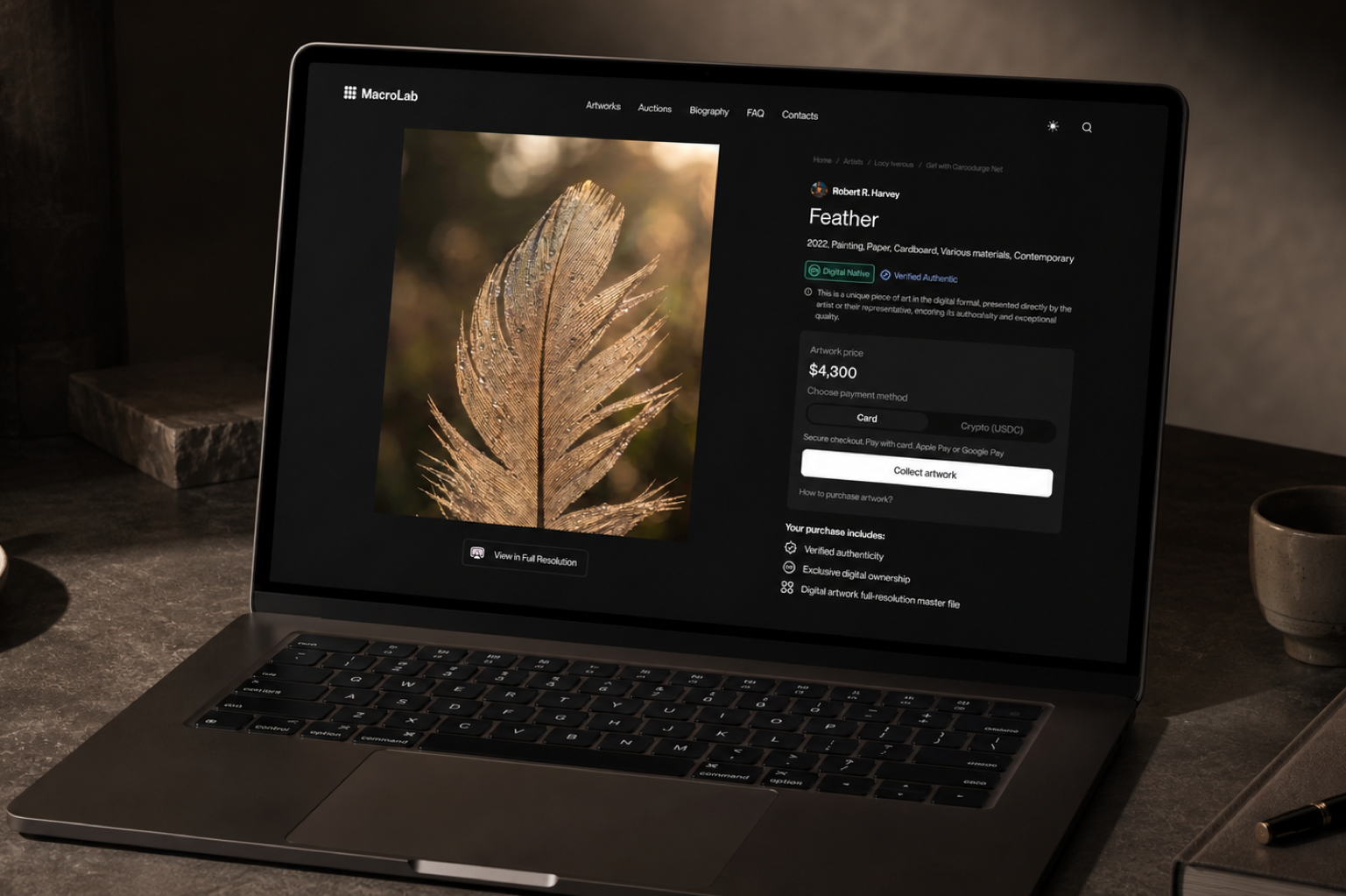
When you are ready, your website can also turn interest into income. You can sell art online directly, or simply mark work as available and receive inquiries. Both digital and physical (phygital) works are supported, which keeps your options open.
Sales are never the starting point. They are a downstream result of showing your work well and building an audience that trusts it.
A website is your base marketing asset — not your whole strategy
Direct Answer: A website is the foundation of your online presence, but it does not promote itself. You still need a marketing approach and a brand. The website is the base every other channel points back to.
Be clear-eyed about one thing: a site alone will not bring an audience. Reach comes from consistent art marketing and a recognizable identity across the channels you already use.
What the website does is give all of that a permanent center. Every post, every submission, every conversation can lead back to one professional home instead of a temporary profile.
We live in a digital era where first contact happens online. According to the Hiscox Online Art Trade Report, buying and discovering art online has grown into a standard part of the market — which makes a credible web presence a baseline, not a bonus. A good website is now a practical must-have for any artist building presence on the internet.

How to start
Direct Answer: Getting started is simple: add your work and your information, and your site builds itself automatically — no technical skills required. Add a custom domain when you want full discoverability, and you have a professional website you can share anywhere.
Digital Original works as a no-code website builder for artists, so presenting your work takes no technical background. You add your art and your details; the profile and portfolio assemble themselves. See what each plan includes on the pricing page.
From there, you can add individual works or group them into selections, connect a custom domain for full findability, and grow into analytics, immersive presentation, and sales as you need them.
Your website becomes the one place your whole creative history lives — findable, presentable, and always yours.